BURNING CHROME | 3G: The network that connected us before the stream
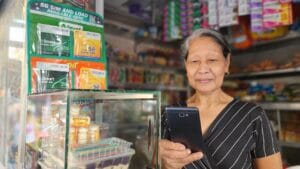
The Philippines is among the countries preparing for the end of third-generation mobile technology.
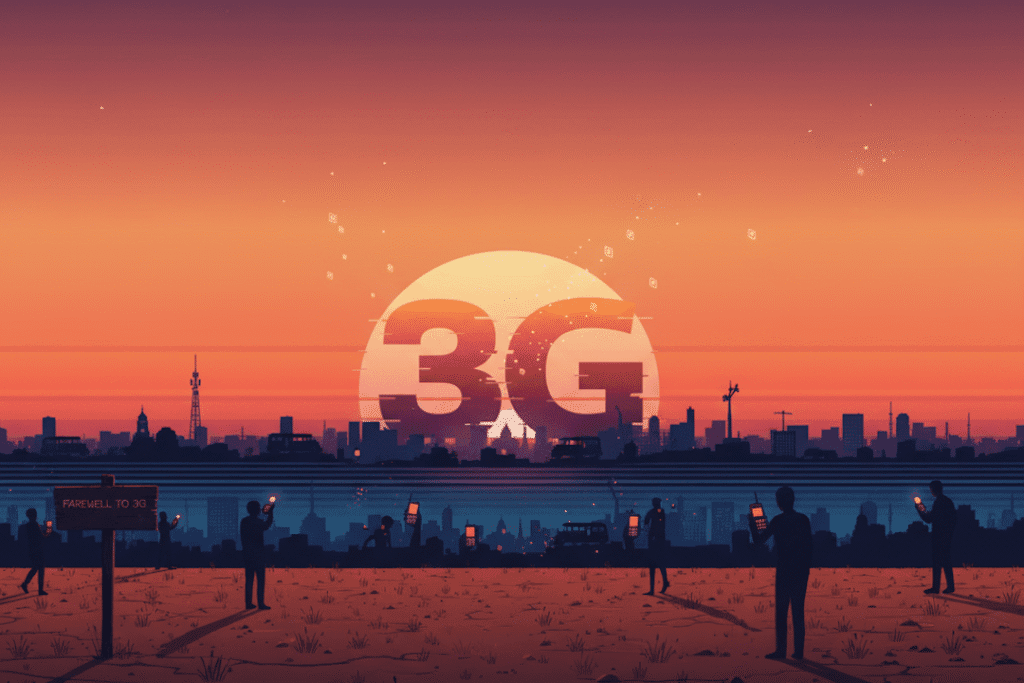
The slow death of 3G is not just a technical story about telecom networks being retired. It is also about how we once imagined the internet in our pockets, how we built a society around that idea, and how we are now watching it quietly disappear into the digital graveyard.
The Philippines is among the countries preparing for the end of third-generation mobile technology. By 2026, if not sooner, the last signals of 3G will vanish from the airwaves, with Smart Communications and Globe Telecom switching off what remains of their networks. The Department of Information and Communications Technology (DICT) confirmed this in a September 2025 announcement carried by ABS-CBN News, saying: “We expect the phase-out of 3G networks by end of September, with complete decommissioning by 2026 to reallocate spectrum for more advanced mobile technologies.”
Yet before we bury 3G, it deserves a proper obituary. It was, after all, the network that made the modern smartphone possible, opened the doors to mobile apps, and carried millions of Filipinos through their first Facebook logins, video calls, and YouTube binges.
To appreciate 3G’s impact, you need to rewind to the late twentieth century when mobile communication was still a novelty. The first generation, or 1G, was pure analog. It gave us bulky handsets, dropped calls, and voice that often sounded like it was traveling through a tin can. Still, it was revolutionary: for the first time, you could talk while on the move, even if it cost a small fortune.
The second generation, 2G, arrived in the 1990s with digital transmission. It introduced text messaging, or SMS, and suddenly the Philippines became the “texting capital of the world.” Filipinos sent billions of messages a day, creating a culture that combined thrift, humor, and connectivity in 160 characters. Data did exist on 2G through GPRS and EDGE, but it was painfully slow.
Then came 3G, the third generation of wireless systems, standardized under the International Telecommunication Union’s IMT-2000 framework. According to ITU records and Wikipedia’s 3G history page, it was launched first in Japan by NTT DoCoMo in 2001 before spreading to Europe, the United States, and eventually Southeast Asia. In the Philippines, 3G licensing began in 2005, with telcos like Smart and Globe required to build out services by 2008, as reported by Phys.org. It was in those years that Filipinos first experienced mobile broadband.
Where 2G made texting addictive, 3G made the internet mobile. Suddenly you could browse web pages, download MP3s, or make a jittery video call without hunting for a desktop computer. At its peak, 3G speeds through HSPA and HSPA+ could reach several megabits per second—enough for early social media platforms and the rise of the smartphone era.
The age of smartphones
What made 3G special was not just raw speed but possibility. For the first time, carriers could market internet as a core service, not an add-on. Mobile apps became viable. Email on the go was no longer the exclusive privilege of a BlackBerry user with a corporate plan.
In the Philippines, 3G played a unique social role. With limited fixed broadband penetration outside the cities, 3G became the first true broadband experience for millions. Facebook’s rapid adoption among Filipinos in the late 2000s was powered less by DSL and more by 3G SIM cards inserted into Nokia handsets and early Androids. The telcos capitalized on this by offering “Facebook for free” bundles, a marketing strategy that expanded digital literacy while also locking people into walled gardens.
It was also a time when tech journalists noticed how the language around mobile phones began to shift. Devices were no longer just “cellphones” but “smartphones.” Applications were no longer pre-installed curiosities but downloadable ecosystems. Mobile internet stopped being a futuristic catchphrase and became part of everyday life.
But technology ages quickly. By the early 2010s, as video streaming surged and mobile apps became heavier, 3G’s limitations grew obvious. Pages loaded slowly, video calls broke apart, and latency made gaming nearly impossible. While HSPA+ offered a stopgap, it was already clear that a leap to fourth generation was necessary.
The pros of 3G were obvious: affordable handsets, global adoption, and enough bandwidth for early mobile internet. Its cons were equally glaring: high latency, relatively low efficiency, and an inability to keep up with the data-hungry culture it had helped unleash.
When 4G LTE arrived, promising speeds ten times faster and latency that actually made online gaming feasible, users leapt toward it. By the mid-2010s, 3G was no longer the network of the future but a backup when LTE signals failed. And with 5G entering the picture in the 2020s, boasting fiber-like speeds and ultra-low latency, the writing was on the wall.
The slow sunset
Telcos across the globe began planning the shutdown of 3G around the same time they were deploying 5G. Spectrum—the invisible airspace over which these networks run—is finite. Every megahertz assigned to maintaining an aging 3G tower was a megahertz that could be re-used for more efficient 4G and 5G traffic.
Local telco, Smart Communications, part of the PLDT group, started scaling back its 3G networks as early as 2020. Manila Bulletin reported in July 2025 that Smart was cutting back on its remaining 3G coverage to encourage users to migrate to 5G. A Smart spokesperson was quoted saying: “We are reallocating spectrum to maximize the benefits of LTE and 5G. Maintaining 3G no longer makes sense given the changing needs of our customers.”
Globe Telecom, meanwhile, removed 3G SIMs from its retail chain as early as 2020, according to DevelopingTelecoms.com. Globe explained its decision at the time in a public notice: “We have discontinued the sale of 3G SIMs in all retail and distribution channels. All new Globe SIMs are 4G LTE- or 5G-ready, ensuring that our customers enjoy faster and better mobile data services.”
The DICT’s “Konektadong Pinoy Act,” reported by DataCenterDynamics in 2025, laid the policy foundation for the 2G and 3G phase-out to free up spectrum for advanced mobile technologies. MobileIDWorld also confirmed that the official government target is to fully decommission 3G by the end of 2026.
The winners of the 3G shutdown are clear: telecom companies that can cut costs and reallocate spectrum, and urban users who will benefit from expanded 4G and 5G capacity.
The losers are more complicated. Low-income Filipinos using older handsets may find themselves cut off from mobile data. Rural communities where LTE coverage is patchy may lose a lifeline if 3G towers are dismantled before adequate replacements are built. Some machine-to-machine and IoT systems designed for 3G connectivity—like old ATMs or point-of-sale devices—will also need expensive upgrades.
This is not just a local issue. In the United States, when AT&T and Verizon shut down their 3G networks, millions of car telematics systems, medical devices, and alarm systems stopped working. The same risks apply here if operators and regulators do not manage the transition carefully.
For the Philippines, the end of 3G is both a technical and a cultural turning point. Technically, it means that telcos can modernize infrastructure and finally push for the kind of internet speeds that other Asian countries have enjoyed for years. Culturally, it marks the end of the network that shaped our mobile internet behavior.
Remember that it was through 3G that millions of Filipinos had their first taste of social media. It was through 3G that the concept of prepaid internet bundles took off, teaching users to consume data in rationed doses. It was through 3G that the first wave of OFWs made affordable video calls back home, albeit pixelated and laggy.
Losing 3G means losing a certain chapter of that history. It is the end of the network that gave us our first digital freedoms, flawed as they were.
Let it go, let it go
From a purely technological perspective, letting go of 3G makes sense. Spectrum efficiency improves. Data speeds rise. Telcos save money. But from a social perspective, the risks remain.
There is a digital divide in this country that 3G, for all its faults, helped bridge. Even with shaky signals, it allowed farmers to check weather updates, students to research homework, and small businesses to accept mobile payments. Pulling that plug without ensuring affordable LTE coverage everywhere risks widening that divide.
This is where regulation and corporate responsibility should meet. If telcos are reaping the benefits of more efficient spectrum, they must also invest in ensuring that LTE and 5G coverage reaches the barrios, not just the business districts. Otherwise, the death of 3G will not just be a technical sunset but a social blackout.
What comes after 3G is clear: a world dominated by 4G LTE and increasingly 5G. Beyond that, research into 6G is already underway in countries like South Korea and China, promising speeds and capacities that feel closer to science fiction.
But for many Filipinos, the immediate concern is not 6G but whether they can afford a phone that works when 3G is gone. The transition to LTE and 5G-only devices will cost money, and without subsidies or affordable options, many may be left disconnected.
There is also a cultural future to consider. Just as nostalgia now surrounds 2G “texting culture,” in a few years we may remember 3G as the network of our digital coming-of-age. It was not perfect. It was slow by today’s standards. But it was ours, and it carried our first memes, our first selfies, our first viral posts.
Goodbye 3G
The disappearance of 3G is not dramatic. There will be no countdown clock, no fireworks. One day soon, you will simply notice that your phone no longer displays the little “3G” icon in the corner. The signal will vanish quietly, like the hum of a machine turned off after years of service.
But the legacy of 3G remains. It taught us that the internet could be mobile, that communication could be visual, and that connectivity could be personal. In the Philippines, it was the bridge from an analog past to a digital present.
As Smart and Globe reallocate spectrum and DICT oversees the final shutdown, we should at least pause to remember the role 3G played in building our connected society. Its decline may be inevitable, but its impact is undeniable.
In the end, 3G’s death is a reminder that technology is never static. Each generation rises, serves, and is replaced. What matters is not the number before the “G,” but whether the technology empowers people or leaves them behind.
As the country marches toward 5G and beyond, the real challenge is making sure the future of connectivity is inclusive. If we fail at that, then the spirit of 3G—the idea that the internet could belong to everyone, not just the privileged few—will truly be gone.