STUDY | Tokyo, Singapore lead global data center construction costs as AI fuels Asia-Pacific boom
With data centers underpinning the world’s digital and AI economy, the competition for capacity — and capital — will intensify across Asia’s rapidly evolving landscape.
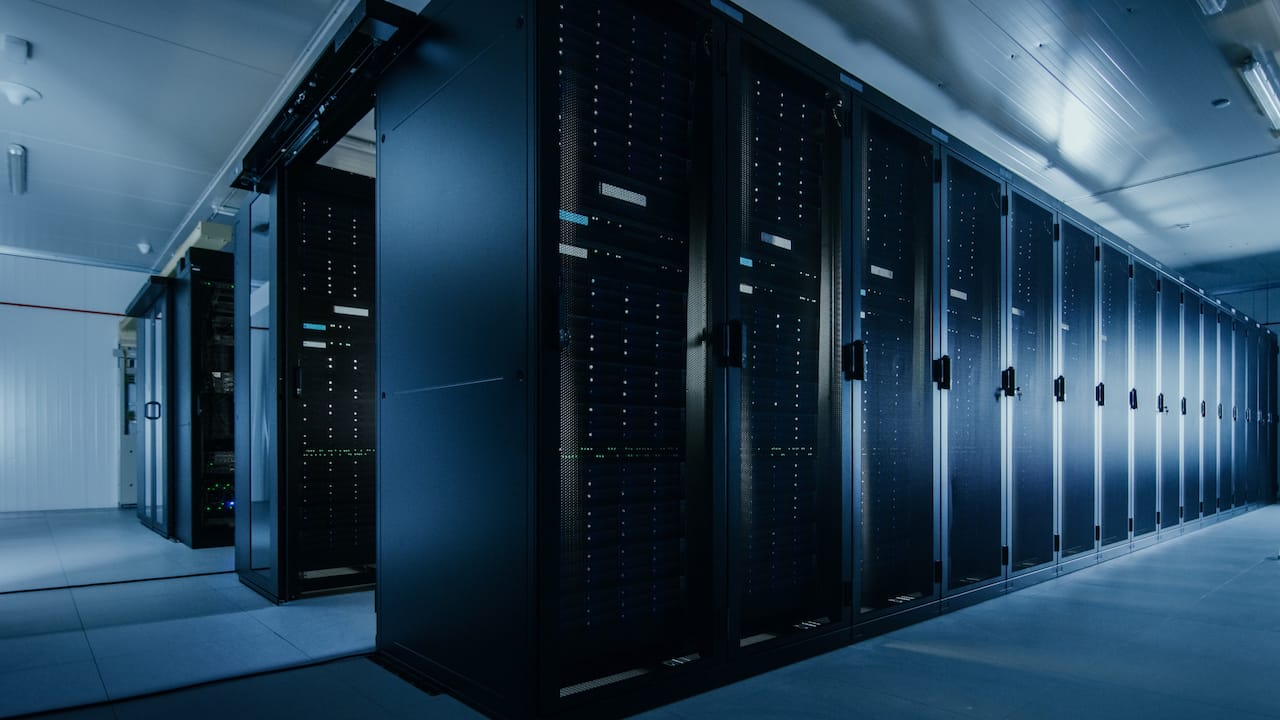
Shot of a Working Data Center With Rows of Rack Servers. Led Lights Blinking and Computers are Working.
The Asia-Pacific region continues to dominate global data center construction costs, with Tokyo and Singapore topping the list of the world’s most expensive markets amid surging demand for AI-ready digital infrastructure, according to Turner & Townsend’s 2025 Data Centre Construction Cost report.
The report found that Tokyo leads all markets with average construction costs of $13.3 million per megawatt, followed closely by Singapore at $12.5 million per megawatt, underscoring the growing scarcity of developable land and skilled labor in both cities. In contrast, secondary Asian markets such as Kuala Lumpur, Manila, and Jakarta remain relatively cost-competitive but are quickly catching up as AI adoption accelerates across industries.
AI, sustainability drive demand
Turner & Townsend noted that artificial intelligence (AI) workloads are reshaping design standards for data centers worldwide, prompting operators to expand power capacity, enhance cooling systems, and adopt greener building solutions. The company observed that AI-driven infrastructure requires significantly higher rack densities and energy efficiency, putting pressure on utilities and regulatory agencies to fast-track permitting and grid expansion.
“AI is no longer a niche workload — it’s becoming a defining design factor,” said Paul Bray, global head of data centers at Turner & Townsend. “The need for robust power delivery, sustainability compliance, and real estate agility is driving a step change in how data centers are built and financed.”
Globally, the average cost of data center construction rose 8 percent year over year, with labor and equipment shortages compounding the impact of stricter sustainability standards and decarbonization targets. The report also highlighted that North America remains the largest market by volume, but Asia-Pacific leads in cost growth because of its rapid digitalization and regulatory constraints on land use and energy.
ASEAN emerges as AI infrastructure hub
In Southeast Asia, Singapore’s tight land policies and moratorium on new data center projects have shifted investor attention to emerging markets such as Malaysia, Indonesia, and the Philippines. These countries are positioning themselves as regional alternatives, offering competitive power rates and government-backed incentives for green and hyperscale developments.
Kuala Lumpur and Johor Bahru, for instance, have become major spillover destinations for Singapore-based operators, while Jakarta is attracting large-scale cloud investments driven by its population size and digital economy potential. Manila is increasingly seen as a growth frontier, with global colocation providers and local telcos scaling capacity to serve both domestic and regional demand.
“The Philippines is gaining traction as an alternative site for hyperscale builds,” the report said, noting that data center costs in Manila average around $8.5 million per megawatt — well below Singapore’s but rising because of power reliability challenges and the need for imported equipment.
Turner & Townsend added that the country’s improving connectivity, cloud adoption, and regulatory openness are helping attract new entrants. However, it warned that high energy costs and limited renewable capacity could slow momentum unless infrastructure and grid upgrades keep pace with demand.
Power, policy, performance
Across the region, power availability remains the single largest bottleneck to new data center developments. Turner & Townsend emphasized that developers now prioritize access to long-term renewable energy contracts and grid interconnection capacity when selecting sites. Governments are responding with new incentives and frameworks to align digital expansion with sustainability goals.
In the Philippines, for example, the Department of Information and Communications Technology (DICT) has prioritized data center investment as part of the country’s Digital Transformation Plan 2028, aiming to strengthen cloud infrastructure and local content hosting. This aligns with the private sector’s ongoing push to establish AI-ready facilities that meet both hyperscale and enterprise needs.
Industry analysts said the entry of global players such as ST Telemedia, YCO Cloud Centers, and Digital Edge is expected to accelerate the Philippines’ transition from an emerging to an established data center market within the next five years.
Global cost trends, market pressures
Turner & Townsend’s report, which surveyed more than 50 markets, also pointed to persistent inflationary pressures in construction materials, logistics, and specialized equipment. Electrical and mechanical components now account for up to 60 percent of total build costs, driven by complex AI and high-performance computing requirements.
“Data center operators are under pressure to deliver both speed and sustainability,” Bray said. “The winners will be those who can integrate modular design, localized supply chains, and renewable power sourcing into their delivery model.”
The report also noted a growing emphasis on circular construction and lifecycle carbon reduction, with major clients demanding net-zero compliance by 2030. Some markets, including Japan and Australia, are already introducing green certification standards specific to digital infrastructure, setting precedents that may shape regional policy frameworks.
AI reshapes the digital landscape
As AI adoption continues to accelerate, Turner & Townsend expects double-digit growth in data center investment across Asia-Pacific through 2026, particularly in markets with stable power grids and clear regulatory pathways. However, it cautioned that escalating costs could squeeze margins and delay new projects unless collaboration among developers, utilities, and policymakers improves.
“AI has shifted data centers from being real estate assets to critical national infrastructure,” the report concluded. “For emerging economies like the Philippines, the opportunity lies in getting ahead of the curve — by investing in power resilience, skilled labor, and sustainable design.”
With data centers underpinning the world’s digital and AI economy, the competition for capacity — and capital — will intensify across Asia’s rapidly evolving landscape.
————————————————————————-
WATCH TECHSABADO ON OUR YOUTUBE CHANNEL:
WATCH OUR OTHER YOUTUBE CHANNELS:
PLEASE LIKE our FACEBOOK PAGE and SUBSCRIBE to OUR YOUTUBE CHANNEL.
PLEASE LIKE our FACEBOOK PAGE and SUBSCRIBE to OUR YOUTUBE CHANNEL.

![[Image] A panel discussion at the International Talent Forum](https://techsabado.com/wp-content/uploads/2026/03/Image-A-panel-discussion-at-the-International-Talent-Forum-300x161.jpg)