SPECIAL FEATURE | It’s 2026, is the Philippines now EV ready?
The short answer: the Philippines is partially ready. The longer answer is that readiness is uneven, fragmented and highly urban-centric.
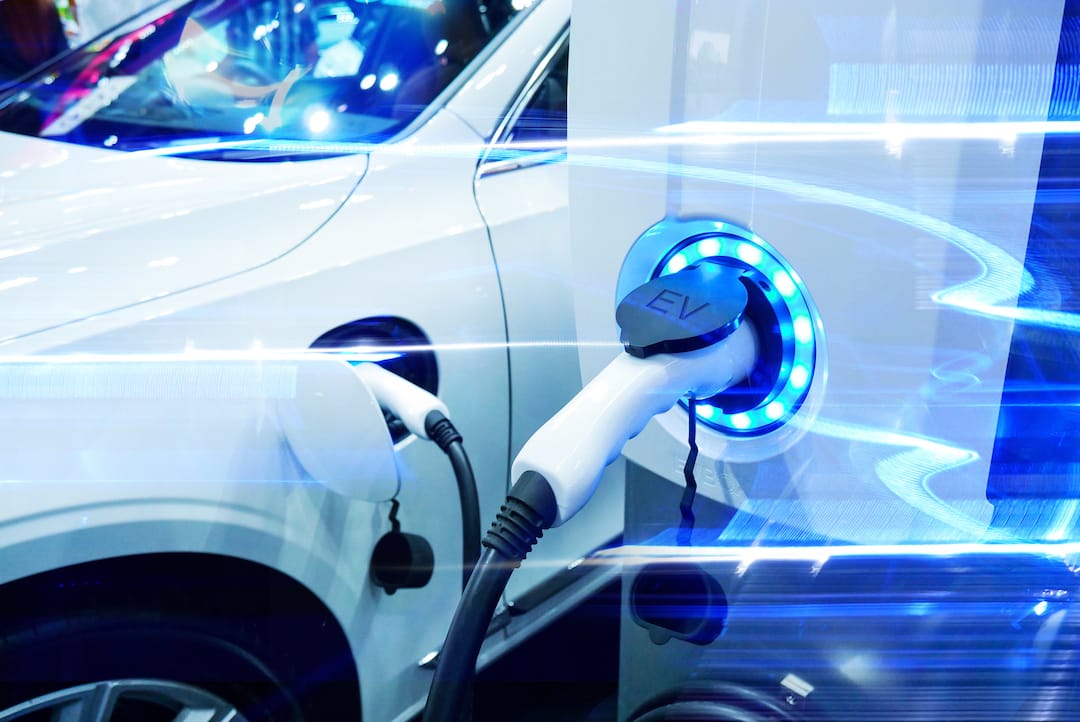
Power supply connect to electric vehicle for charge to the battery. Charging technology industry transport which are the futuristic of the Automobile. EV fuel Plug in hybrid car. (Power supply connect to electric vehicle for charge to the battery. Cha
Electric vehicles are no longer a speculative technology. Across Asia, they are being framed as industrial policy, climate response and urban transport reform rolled into one. In the Philippines, the question is no longer whether EVs will arrive, but whether the country’s systems—power, roads, industry and regulation—are prepared for them.
The short answer: the Philippines is partially ready. The longer answer is that readiness is uneven, fragmented and highly urban-centric, with risks of repeating past infrastructure mistakes if policy momentum outpaces ground realities.
The Philippines has already signaled its direction. Incentives for EV importation and local assembly, reduced tariffs, and the government’s push for electrified public transport show a clear policy preference. Jeepney modernization and pilot e-bus deployments in Metro Manila are not symbolic; they are structural signals.
But policy intent is not the same as system readiness. EV adoption is not a consumer electronics problem; it is an infrastructure problem. Without coordinated execution across power generation, grid stability, charging networks and urban planning, incentives alone will benefit only a narrow, affluent segment.
EVs shift emissions from tailpipes to power plants. That shift makes sense only if the grid can absorb new demand without increasing fossil fuel dependence or destabilizing supply.
The Philippine grid already struggles with peak demand, thin reserve margins and transmission bottlenecks, especially outside Luzon. Large-scale EV adoption—particularly fast-charging fleets—will stress local distribution networks, not just national generation capacity.
This is where timing matters. EVs make the most sense when paired with renewable expansion, distributed solar, storage and smarter demand management. Otherwise, electrification risks becoming a shell game: cleaner streets, dirtier power mix.
Metro Manila is slowly becoming EV-viable. Private malls, office parks and new developments are beginning to integrate chargers. Fleet operators—logistics firms, ride-hailing platforms and corporate transport—can already plan controlled charging cycles.
Outside major urban corridors, the picture changes sharply. Range anxiety in the Philippines is not psychological; it is geographic. Long intercity distances, inconsistent road quality and sparse charging points make private EV ownership impractical in most provinces.
Public transport electrification has better odds. Fixed routes, centralized depots and predictable schedules favor e-jeepneys and e-buses. This is where the country’s EV transition is most realistic—and most socially impactful.
EV advocates often claim job creation as a benefit. This is only partially true.
EVs have fewer moving parts and lower maintenance requirements than internal combustion vehicles. Over time, this reduces demand for traditional automotive repair jobs. Without reskilling programs, this becomes a labor displacement issue, not a green win.
Job growth will come—if it comes—from different places: battery assembly, charging infrastructure installation, software, fleet management and power systems. These are higher-skill jobs that require targeted training and industrial policy. Without that, the Philippines risks becoming a pure importer of EVs and an exporter of automotive labor relevance.
There is potential for localized EV assembly, especially for two- and three-wheelers, utility vehicles and public transport platforms. Southeast Asia’s EV supply chains are already diversifying beyond China, and the Philippines could carve out a niche.
But this requires scale, policy coherence and energy reliability—three things the country has historically struggled to align. Without stable power costs and logistics, local EV manufacturing will remain marginal.
If the EV transition is driven primarily by private car ownership, it will fail its social test. EVs will become another marker of inequality: clean mobility for the wealthy, aging diesel transport for everyone else.
The more credible path is public-first electrification: jeepneys, buses, delivery fleets and government vehicles. This reduces emissions, improves air quality and spreads benefits across income groups.
One Philippine-specific lesson is unavoidable: transport reform that ignores livelihoods collapses politically. EV policy must integrate financing models that protect drivers, cooperatives and small operators, or resistance will harden.
The Philippines is ready in direction, not yet in depth.
The policy signals are there. The technology is mature. The urban pilots work. What is missing is systemic coordination—between energy planners and transport agencies, between industrial policy and labor transition, between urban centers and the rest of the country.
EVs are not just vehicles. They are rolling stress tests of national capacity. Whether the Philippines passes that test will depend less on how fast EVs are adopted and more on how deliberately the transition is designed.
If done right, EVs can modernize transport without repeating the mistakes of car-centric development. If rushed, they risk becoming another imported solution poorly matched to local realities.
The road ahead is electric—but only if the groundwork is laid first.
————————————————————————-
WATCH TECHSABADO ON OUR YOUTUBE CHANNEL:
WATCH OUR OTHER YOUTUBE CHANNELS:
PLEASE LIKE our FACEBOOK PAGE and SUBSCRIBE to OUR YOUTUBE CHANNEL.
PLEASE LIKE our FACEBOOK PAGE and SUBSCRIBE to OUR YOUTUBE CHANNEL.


![[Image] A panel discussion at the International Talent Forum](https://techsabado.com/wp-content/uploads/2026/03/Image-A-panel-discussion-at-the-International-Talent-Forum-300x161.jpg)