GADGETS | ASUS expands AI PC lineup with dual-screen Zenbook DUO, creator-focused ProArt devices
The lineup spans high-end creator machines under the ProArt brand, dual-screen and ultraportable Zenbook laptops, more affordable Vivobook models, and new desktops and all-in-one systems.
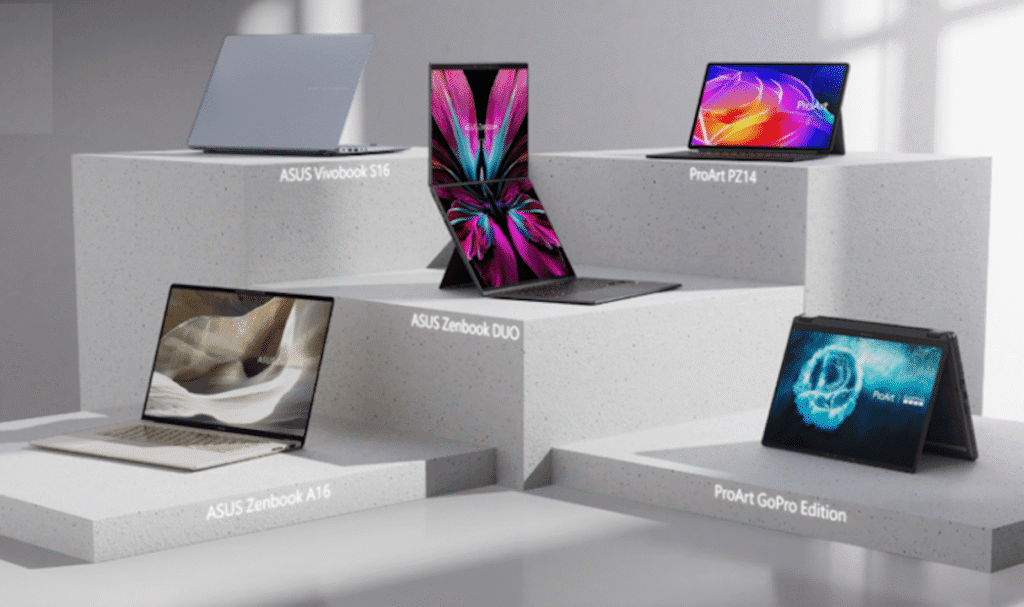
A new wave of AI-powered personal computers is arriving in 2026, as ASUS unveiled a broad lineup of laptops, desktops, and all-in-one PCs at CES that centers on Copilot+ capabilities, on-device AI acceleration, and form factors aimed at creators and everyday users.
The lineup, announced Jan. 7 at the annual technology show, spans high-end creator machines under the ProArt brand, dual-screen and ultraportable Zenbook laptops, more affordable Vivobook models, and new desktops and all-in-one systems. Together, the products reflect a push toward AI-ready PCs built around the latest processors from AMD, Intel, and Qualcomm.
Dual screens, lighter builds for mobile productivity
At the center of the announcement is the 2026 Zenbook DUO, which ASUS positions as a rethink of mobile multitasking. The device pairs two 14-inch 3K OLED displays in a redesigned chassis made from the company’s Ceraluminum material, aimed at reducing weight while improving durability.
ASUS said the new DUO features a redesigned hinge that minimizes the gap between the two screens, a detachable Bluetooth keyboard, and a dual-battery system rated at 99Wh. The laptop runs on Intel Core Ultra X9 Series 3 processors and supports Copilot+ PC features, with ASUS ScreenXpert software enabling cross-screen sharing and annotation when the device is laid flat.
The Zenbook DUO was recognized with a CES 2026 Innovation Award, following a similar accolade for the previous generation.
Alongside it, ASUS introduced two Snapdragon-powered ultraportables: the Zenbook A16 and Zenbook A14. The A16 pairs a 16-inch 3K OLED display with a chassis weighing about 1.2 kilograms, while the A14 targets sub-1-kilogram portability. Both models are built around Qualcomm’s Snapdragon X2 Elite platform, with the A16 using the higher-end X2 Elite Extreme variant.
ProArt focuses on creators, hybrid workflows
For creators, ASUS expanded its ProArt lineup with new convertibles and a detachable tablet designed around on-device AI workloads.
The ProArt GoPro Edition (PX13), developed in partnership with GoPro, is a limited-edition 13-inch convertible that integrates GoPro Cloud access directly into Windows via ASUS StoryCube app. ASUS said the device includes a dedicated GoPro hotkey and ships with a 12-month GoPro Premium+ subscription, positioning it as a mobile editing tool for action and 360-degree video.
The PX13 runs on AMD Ryzen AI Max+ 395 processors and supports up to 128GB of unified memory, allowing it to handle AI-assisted video tasks such as upscaling, denoising, and stabilization on-device. A standard ProArt PX13 variant with similar specifications but without GoPro branding was also announced.
ASUS also introduced the ProArt PZ14, a 14-inch detachable tablet weighing about 0.79 kilograms. Built on Qualcomm’s 18-core Snapdragon X2 Elite platform, the PZ14 is positioned as a mobile creator tablet with stylus support, OLED display technology, and integrated ASUS creator apps for idea generation, asset organization, and color management.
Vivobook, mainstream AI laptops
For more mainstream buyers, ASUS refreshed its Vivobook S series with 14-inch and 16-inch models that support Copilot+ features and AI-assisted video and audio enhancements. Depending on configuration, the Vivobook S models use Intel Core Ultra Series 3, AMD Ryzen AI 400 Series, or Snapdragon X2 Elite processors.
ASUS said the Vivobook S line targets budget-conscious users who want AI features such as noise cancellation, AI camera effects, and long battery life without stepping into premium pricing tiers.
Desktops, all-in-one PCs join Copilot+ push
The CES announcement also extended ASUS’ AI PC strategy beyond laptops. New V series desktops, including mini tower and small-form-factor options, are designed to bring Copilot+ capabilities into home and home office setups.
Among them is the V700 mini tower, which combines AMD Ryzen AI processors with discrete NVIDIA graphics in a design ASUS described as optimized for quiet operation and living-room-friendly aesthetics.
ASUS also introduced the VM441QA, which it described as the world’s first Snapdragon-powered all-in-one PC. The 23.8-inch system runs on Qualcomm’s Snapdragon X platform and is designed for low-noise, energy-efficient operation while supporting Copilot+ features and AI-enhanced communications.
Building an AI PC ecosystem
Across the lineup, ASUS emphasized its software layer, including proprietary AI apps and cross-device tools such as GlideX, which allows screen sharing and file transfers between Windows PCs and mobile devices running iOS or Android.
The company framed the 2026 lineup as a unified Copilot+ PC ecosystem, combining hardware acceleration, operating system features, and in-house software to support AI-assisted productivity, creativity, and collaboration.
While pricing and local availability were not disclosed at CES, ASUS said the new devices will roll out through 2026, with configurations varying by market. The breadth of the lineup underscores how PC makers are betting that AI acceleration and new form factors — from dual screens to detachable tablets — will drive the next upgrade cycle in personal computing.
————————————————————————-
WE ARE 10 YEARS OLD! TEN YEARS OF TECHSABADO, IMAGINE THAT.
WATCH TECHSABADO ON OUR YOUTUBE CHANNEL:
WATCH OUR OTHER YOUTUBE CHANNELS:
PLEASE LIKE our FACEBOOK PAGE and SUBSCRIBE to OUR YOUTUBE CHANNEL.
PLEASE LIKE our FACEBOOK PAGE and SUBSCRIBE to OUR YOUTUBE CHANNEL.