OP-ED | From PHNet to platform nation: 32 years of internet access in the Philippines
The country’s initial connection was established through the Philippine Network Foundation, with support from the Department of Science and Technology and technical coordination at the University of the Philippines Diliman.
Today, March 29, the Philippines marks another year since its first connection to the global internet in 1994, a milestone that transformed the country from an academic network outpost into one of the world’s most socially connected digital societies.
The anniversary traces a trajectory shaped by policy reform, market liberalization, mobile technology and the rise of platform-driven communication — developments that continue to define how Filipinos access, use and experience the internet today.
From academic experiment to national network
The country’s initial connection was established through the Philippine Network Foundation, with support from the Department of Science and Technology and technical coordination at the University of the Philippines Diliman.
Using a 64-kilobit-per-second leased line to the United States, early internet access was limited to researchers and academic institutions. Before full connectivity, communication relied on store-and-forward email systems, underscoring the experimental nature of early networking efforts.
At the time, internet access was neither commercial nor public-facing. It functioned primarily as a research tool, accessible to a small technical community.
Structural constraints in the early years
The expansion of internet access in the mid-1990s faced significant barriers, largely tied to the country’s telecommunications infrastructure.
The sector was dominated by Philippine Long Distance Telephone Company (PLDT), with limited landline penetration and aging copper networks constraining connectivity. Dial-up access required a telephone line, making internet use both costly and unreliable.
Access remained concentrated among universities, government agencies and a narrow segment of urban users. Technical expertise was also limited, and local online content was minimal.
These conditions positioned the internet as a specialized service rather than a mass communication medium.
Know more about the history of Philippine internet access through the people who were actually there in the March 28, 2026 episode of TECHSABADO.
Deregulation opens the market
A turning point came under the administration of Fidel V. Ramos, whose government introduced reforms that liberalized the telecommunications sector.
Executive Order No. 109 mandated interconnection among telecom operators and encouraged competition. This policy shift enabled new players, including Globe Telecom and Smart Communications, to enter the market.
The result was a rapid expansion of telecommunications infrastructure and the emergence of commercial internet service providers (ISPs). Internet access began to transition from academic use to a consumer service, setting the stage for broader adoption.
Rise of internet cafés and early digital culture
By the late 1990s and early 2000s, internet cafés — locally known as computer shops — became the primary access points for many Filipinos.
These spaces enabled widespread use of email, chat platforms and early web services. Applications such as instant messaging and online forums facilitated communication, particularly among overseas Filipino workers and their families.
The period also saw the emergence of blogging and online communities, marking the early stages of digital participation beyond institutional use.
Economically, the growing internet ecosystem contributed to the development of the business process outsourcing (BPO) sector and the expansion of the country’s information and communications technology workforce.
Smartphones redefine access
The most significant shift in internet access occurred in the 2010s with the proliferation of smartphones.
Affordable Android devices and prepaid mobile data plans enabled users to go online without relying on fixed broadband connections. Internet access shifted from shared spaces to personal devices, accelerating adoption across income groups and geographic regions.
This mobile-first model allowed the Philippines to bypass the extensive fixed-line infrastructure seen in other countries, but it also shaped how users engage with the internet.
Platforms become the internet
As access expanded, usage became increasingly centered on mobile applications rather than the open web.
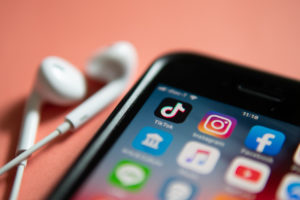
Platforms such as Facebook, Messenger, YouTube and TikTok emerged as primary gateways to information, communication and entertainment.
Telecom offerings that bundled or zero-rated specific platforms further reinforced this pattern, effectively narrowing the user experience to a limited set of services.
For many users, social media platforms have become synonymous with the internet itself.
Social media intensity and its effects
The Philippines consistently ranks among the highest globally in social media usage, both in time spent and engagement levels.
This has given rise to distinct digital phenomena, including influencer-driven economies, rapid meme circulation and always-on communication patterns. Social media has also become central to political discourse, with campaigns and public messaging increasingly conducted online.
At the same time, the environment has enabled the spread of disinformation, raising concerns about information integrity and platform accountability.
Cybercrime law and digital governance
The legal framework for internet regulation took shape with the passage of the Cybercrime Prevention Act of 2012.
The law criminalizes offenses such as hacking, identity theft and online fraud, while also extends libel provisions to digital platforms. Its implementation is supported by agencies including the Philippine National Police Anti-Cybercrime Group and the Department of Information and Communications Technology.
In 2014, the Supreme Court of the Philippines upheld most provisions of the law while invalidating certain sections deemed unconstitutional.
The legislation established the state’s role in regulating cyberspace but also introduced ongoing debates around free expression and digital rights.
Persistent challenges
Despite significant progress, structural issues remain.
Internet speeds and costs continue to lag behind regional peers, while connectivity gaps persist in rural and geographically isolated areas. Market concentration between major telecom providers limits competition, and the platform-centric nature of usage raises questions about digital literacy and information diversity.
A system shaped by convergence
Three decades after its first connection, the Philippine internet is defined by the convergence of access, platforms and regulation.
What began as a limited academic network has evolved into a pervasive digital environment where connectivity is widespread but uneven, and where the challenges have shifted from access to governance and information quality.
As the country marks the anniversary of its entry into the global internet, the trajectory reflects both rapid transformation and unresolved structural tensions — a system that is highly connected, deeply social and still in transition.
————————————————————————-
WE ARE 10 YEARS OLD! TEN YEARS OF TECHSABADO, IMAGINE THAT.
WATCH TECHSABADO ON OUR YOUTUBE CHANNEL:
WATCH OUR OTHER YOUTUBE CHANNELS:
PLEASE LIKE our FACEBOOK PAGE and SUBSCRIBE to OUR YOUTUBE CHANNEL.
PLEASE LIKE our FACEBOOK PAGE and SUBSCRIBE to OUR YOUTUBE CHANNEL.