TECH NEWS | Pinoys turn to unregulated online gambling despite risks, study finds
The two-part research by The Fourth Wall, surveyed 400 current and former online gambling players across Mega Manila, Metro Cebu, and Metro Davao in August 2025.
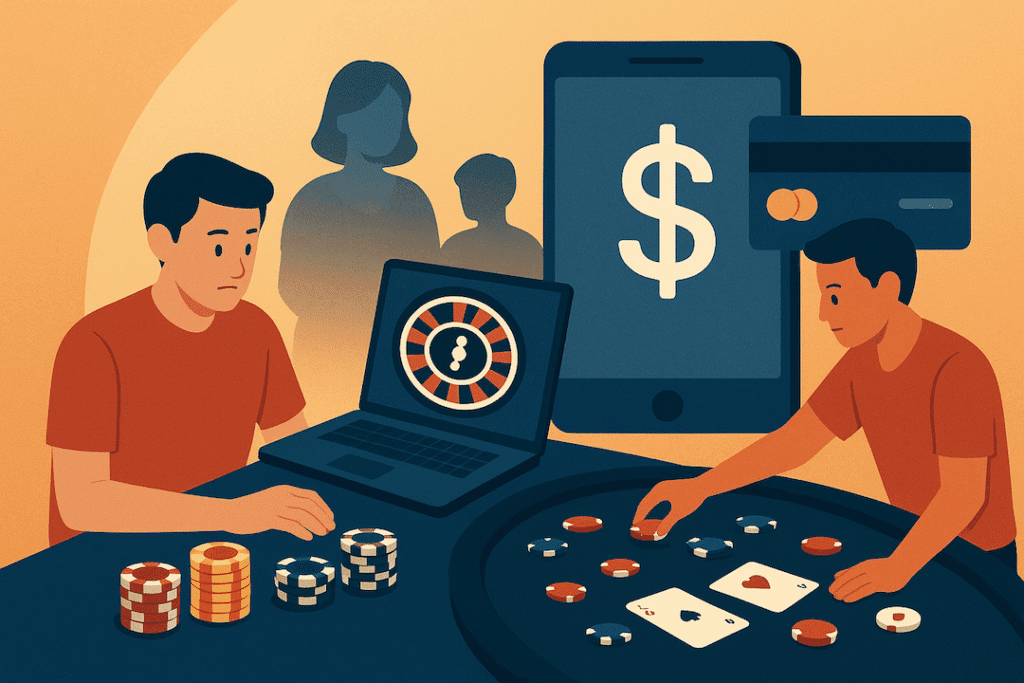
AI image by ChatGPT
A new sociocultural study has found that many Filipinos engaging in online gambling remain unaware of the risks tied to unregulated platforms, exposing them to financial losses, scams, and weak consumer protections.
The two-part research by The Fourth Wall, a Filipino-focused research firm, surveyed 400 current and former online gambling players across Mega Manila, Metro Cebu, and Metro Davao in August 2025. It revealed that more than half of players (55%) admitted they were unaware of the legal implications of unregulated play, while another 33% said they knew “a little.” Only 12% found the rules clear, highlighting a significant knowledge gap.
Who plays and why
Most players are between 26 and 45 years old, from lower-income households, and married with one or two children. They view gambling as a form of casual leisure, yet their behavior often veers into high-risk patterns. Nearly 41% play two to three times a week, while a third gamble four or more times weekly—frequencies far higher than in regulated platforms.
Betting habits are also riskier online. While most players wager P100 to P499, high-stakes betting of P1,000 or more occurs almost exclusively in unregulated spaces. Losses of P5,000 or higher were reported largely in unregulated play, compared with smaller losses in regulated platforms.
Players cited wider game variety, faster transactions, convenient e-wallet and crypto options, and frequent promotions as their top reasons for favoring unregulated sites. “Confidence, fairness, and profitability matter more than features such as betting limits or affiliate programs,” said John Brylle L. Bae, research director at The Fourth Wall. “This explains why players, despite the uncertainty, continue to engage as long as they perceive a chance to win.”
The four player personas
The study grouped players into four personas:
High-stakes losers (44%): frequent high bettors who lose more than they win, seen as most at risk.
Perceived winners (28%): players who believe they are ahead, making them unlikely to shift to regulated platforms.
Casual break-even players (17%): low-frequency, low-stakes gamblers who see play mainly as entertainment.
Regulated converts (11%): those who split play between unregulated and regulated platforms but prefer the latter, making them more likely to migrate fully.
Weak safeguards and aggressive marketing
The contrast between regulated and unregulated platforms is stark. PAGCOR-licensed operators require Know Your Customer checks, enforce betting caps, and provide formal dispute resolution. By comparison, over 90% of players said they were able to join unregulated sites with little to no verification, leaving minors and vulnerable groups exposed. Around 80% reported no betting limits.
Aggressive promotions dominate the unregulated experience. Nearly all players recalled being exposed to promos, with half reporting three or more in a month. Most offers were onboarding incentives such as welcome bonuses, free credits, or spins. Affiliate programs were less influential, with only 15% of players participating.
Players also reported weak customer service. Among those who encountered problems such as blocked withdrawals or scams, 37% said their complaints were acknowledged but unresolved, and 16% said they received no response at all.
Divided confidence
Perceptions of fairness and trust remain mixed. About 39% of players doubted the fairness of unregulated platforms, compared with 27% who felt confident. Another 28% were neutral. Similar uncertainty emerged in overall confidence levels, where more players leaned uneasy than assured.
Despite the risks, player retention is shaped less by legality than by perceived profitability and trust. According to The Fourth Wall’s predictive modeling, confidence in platforms, belief in fairness, and a sense of winning drive players to stay, while legal awareness and unresolved disputes push them away.
What it means for policy
The research underscores the challenges regulators face in tackling the rise of unregulated gambling. Rather than focusing solely on enforcement against players, the study suggests policymakers and operators could make regulated platforms more attractive by strengthening safeguards, improving complaint resolution, and designing responsible yet engaging promotions.
“Trust, not legality, drives player behavior,” Bae said. “Clearer communication around protections, transparency, and user rights may encourage players to prefer regulated environments.”
As online gambling expands in the Philippines, the study concludes that data-driven policies, not assumptions, are needed to address the risks—especially for vulnerable groups caught in unregulated play.
WATCH TECHSABADO ON OUR YOUTUBE CHANNEL:
WATCH OUR OTHER YOUTUBE CHANNELS:
PLEASE LIKE our FACEBOOK PAGE and SUBSCRIBE to OUR YOUTUBE CHANNEL.
PLEASE LIKE our FACEBOOK PAGE and SUBSCRIBE to OUR YOUTUBE CHANNEL.