BURNING CHROME | As it was, when it was: The new album on Pinoy underground ’80s and the great rock ’n’ roll swindle
…or in other words: the liner notes that never made it to the album
NOTE: THIS ARTICLE ORIGINALLY APPEARED IN MY NOVEMBER 2006 BLOGSPOT POST.
’80s pop culture was an enigma. Thick shoulder pads were the order of the day, while Aga Muhlach strutted his way to poseurdom. Yet despite the (un)forgettable state of Pinoy pop culture at that time, another kind of scene was seething on the fringes.
There was a place at 18 Anonas St., Project 2, called A2Z Records (relocated from Kamias). It was a record bar that, at that time, had everything unavailable elsewhere—at least in ’80s Manila. New Order, Joy Division, The Smiths, The Cure, Dead Kennedys, Psychic TV, The Jam, Stiff Little Fingers, The Damned were some of the artists on the A2Z vinyl racks. It was the coolest joint to hang out in.
And hang out we did, from local punk Dominic “Domeng” Gamboa (Betrayed) to pre-blues Binky Lampano (Dean’s December), spending late afternoons individually discussing the meaning—or the lack of it—of life. Dina, the soul behind the A2Z desk, with the help of Sonia (later the soundbuzz.com lady), tried to maintain order and make sure the Recto punks wouldn’t steal the latest British copy of Punk and Disorderly.
The scene at A2Z at that time was straight out of that John Cusack starrer High Fidelity—complete with blasting music, nonstop babble about the most obscure trivia, as well as the bragging and sniping. The place, owned by my editor at Jingle Chordbook Magazine, Ces Rodriguez, and her beau, Leslie David, was a sanctuary for music of every kind. They had Miles Davis, the Modern Jazz Quartet, Johnny Cash, The Band, George Gershwin, and early Stones on their racks. So I hung around, deeming I had the right as a music journalist to record everything that needed to be heard—and to partake of Leslie’s cooking. That was a sign I was “in,” having access to the basement kitchen and sleeping quarters.
And belong I did. On mornings in the mid-’80s, I worked as an early-day custodian for the bar, accepting a daily wage below the minimum. But that didn’t matter. As long as I could record or get a copy of those fresh new-music records that Toti Dalmacion (yes, the same dude at Groove Nation) lent to the store directly from Hong Kong or LA, it was music heaven. To have the first copy of Psychocandy and Brotherhood—those were high points.
Chill out, chong Out
But new wave was the order of the day. While the entire country drowned in the music of Duran Duran and Culture Club, people at A2Z were listening to The Fall, Tones on Tail, The Specials, and Bad Manners. Ces and company would later hold successful new wave shindigs in small local bars in Malate, where the likes of DJ Par Sallan (aka Par Satellite), also a Pinoy punk staple, would spin the best—if not the latest—from the British underground. The team would later buy airtime for their own radio show, “Capital Radio,” so they could play what they wanted on DWXB 102, an underdog FM station that, by sheer cult status, spawned many enterprises, including a portion of the T-shirt industry along Recto Avenue.
Bands such as XTC, Bauhaus, The Cure, and Japan were first—and only—heard on XB, while Capital Radio scraped deeper with The Jesus and Mary Chain, Buzzcocks, Generation X, U.K. Subs, Circle Jerks, ska bands from Coventry, and yes, even Motown. Local proponents Dean’s December, Violent Playground, Identity Crisis, and Ethnic Faces also found a comfortable home in the government-sequestered 10,000-watt station.
The term “chong”—to distinguish the new wavers from the punks—originated from the jocks who spun for the A2Z team. Stubborn teens who couldn’t get into the music of Paul Weller or Joe Strummer would approach the booth and irritatingly ask, “Chong, chong, ‘State of the Nation’ naman.” The name stuck forever.
In an article by Didits Gonzales
Rock journalist and photographer Didits Gonzales drew the better distinction between punks and chongs in a column called The Low Life for A2Z’s in-house newsletter and fanzine The Shop (c. 1987):
“Chongs and mobile discos go together. You’ll find them in trendiest discos, privately organized parties, 102 soirées, and Identity Crisis concerts. Chongs go to school and eventually take over the family’s handicraft business. Punks avoid school like the plague, and if they don’t end up dead, they end up scrubbing decks on merchant marine ships plying the Persian Gulf. You can have a decent if somewhat shallow conversation with a chong. You can have a slurring match with a punk but remember to duck when you see the first sign of a puke-a-thon. Chongs have cars, punks have no money. Enterprising punks have car spare parts. And when chongs and punks meet … they ignore each other.”
Well, that sums it up.
Punks not dead! Or so they thought
But another scene began thrusting its way out of the underbelly of popular culture. More than 10 years before the Eraserheads, and only a couple of years after Sid Vicious crossed the line between punk and stupidity, Pinoy rock was slashed in the face by an underground music scene that would leave a haunting scar.
Tommy Tanchanco and his Twisted Red Cross (TRC) cohorts led the way in the early ’80s and introduced some of the best, if not the brightest, stars in Pinoy underground music. TRC was bred from punk. The music was harsh, hard, and in your face.
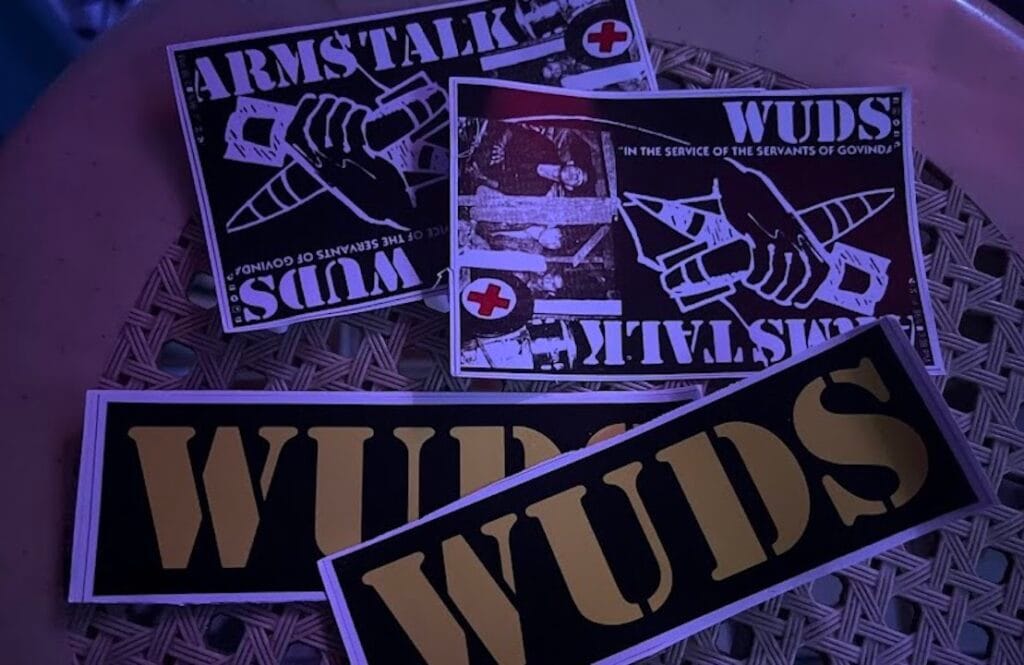
Bands such as Betrayed, I.O.V., and G.I. and the Idiots—including two of my personal favorites, Urban Bandits and The Wuds—were among those who carried the battle flag in full punk regalia. Like its origins in decadent ’70s England, Pinoy punk created tribes stretching from the gutters of Malibay in Pasay to the side streets of Recto, disturbing even the once-rural life of Malabon.
Pinoy punk threw their guttersnipe punches in Brave New World concerts at PhilCite, in an ihaw-ihaw shelter in Malate called Katrina’s, or at rundown gymnasiums far from police precincts. Chicoy Pura’s The Jerks, who at one time played regularly at On Disco on Roxas Boulevard, became club favorites for performing upcoming classic punk tunes from London to New York. Indie filmmaker Patrick Puruganan immortalized the Pinoy punk scene with his short flick Generation Lost, making reluctant underground stars out of Noel F. Lim and Dominic Gamboa. And let’s not forget Dante “Howlin’ Dave” David, RJAM rock jock meister who punked his way out of the boredom of martial law.
Under the TRC label, Pinoy punk thrashed their wares on compilation cassettes such as Rescue Ladders and Human Barricades and Katrina’s Live – Tama na Away! Tommy documented everything in his punk zine Herald X under the editorial guidance of Edwin Sallan and the late Dodong Viray.
Yet, however pure it was, the immaculately dark conception of punk had to end. When hype started to creep in, it was a sign that spiked hair and bondage pants had become no more than a fad. The chongs ended up mixing with the punks, and suddenly they melted into a single fashion statement. Blame it on MTV. Blame it on Aga Muhlach. And blame it much on Ray “PJ” Abellana and Leni Santos, who starred in a That’s Entertainment-style teen-trash musical called—what else—The Punks. The entire cast of Generation Lost deteriorated to the reality of being a lost generation. Along with the safety pins and Meralco boots, the music got lost too.
The Maya sings
So what does a general overview of the ’80s underground have to do with Rivermaya? A lot.
If the underground ’80s showed us that Pinoy rock reigned beyond pop culture, the alternative ’90s gave rise to a new breed of Pinoy music pinned to the heart of pop. Many of the bands bred in the late ’80s from the underground bar Red Rocks (later Club Dredd) in Timog Avenue and university-belt favorite Mayric’s produced some of the best Pinoy rock this country had seen.
Although Rivermaya couldn’t pinpoint their origins in those places, the band proved itself a tenacious wunderkind, churning out hits at the rate bands today come and go, while maintaining an omnipresent “alternative” vibe that distinguished it from those slicked to perfection by the mainstream industry.
Except that Rivermaya was equally slick and commercial. I hated them. I hated how their manager was the Lizza Nakpil and how well she did her job pimping the band to people, places, and events Dreddheads and their ilk would never dream of being associated with.
So Rivermaya looked alt, smelled alt, and sounded kinda alt, but I felt they still didn’t have karapatan. Their creds were shot by a … marketing plan.
In the ’90s, Rivermaya was not only the new kid on the block; they were, in the elitist underground I prowled, the only kids outside the block. For example, while many, if not all, Pinoy bands played for beer money at the piss-smelling Club Dredd on Edsa, Rivermaya gigged at an Italian restaurant at the Atrium in Makati on weekends (the same place where Razorback and Wolfgang got their kicks).
The band wooed the crowd from International School. They were safe and fashionable for Makati’s teenage elite and quickly landed a record deal, maybe not by sheer talent alone, but—according to rumors at the time—through the industry connections of their movie director manager, Chito Roño, and his socialite PR partner. (Nakpil vehemently denied this assertion.)
They were cuties too, whom Chito Miranda of Parokya ni Edgar and Ely Buendia of the Eraserheads—certified Dreddizens—couldn’t hold a candle to. Rico Blanco’s ube-colored hairdo and Mark Escueta’s colegiala-killer looks? They hadn’t paid their dues yet.
Worse, the band suffered the stigma of being a manufactured act, as many in the alternative scene believed, put together by Roño and Nakpil on specs. Of course, I conveniently forgot that the Sex Pistols were manufactured too, even if they later leaped across Malcolm McLaren’s svengali fantasies and took a life of their own.
But the specs were spot-on. The band had chops, looks, talent. (I myself, unashamedly, have “214” in my iPod.) In 2000, Rivermaya even made mini music history by being one of the first mainstream acts to eschew normal distribution channels and market their album online. Their schtick: Free, the aptly named CD, was a gift to fans. It also marked the first time Rico Blanco emerged as frontman.
Why do Rivermaya continue to remain strong and high profile? Well, Rico Blanco, feyly good-looking, knew how to write three-minute pop gems—emo but affecting, hummable but inspired.
Kayong nag-tataka, nag-tataka …
So for Rivermaya to cover one of the best songs to come out of Pinoy punkdom, by a band who probably received teenage panties and bras for Christmas from their girl fans, was courting danger. The Wuds’ Inosente Lang ang Nagtataka, as with the Urban Bandits’ No Future sa Pader, is a classic example of what the ’80s underground really was: fast, hard, and painfully true. (Personally, I would have chosen The Wuds’ At Nakalimutan ang Diyos for this album. But that would have been truly ironic.)
In fact, with this new album Isang Ugat, Isang Dugo, Rivermaya is on dangerous ground. If it were an extreme sport, they’d be jumping from a high-rise to their deaths without a chute. Nonetheless, it takes courage and real gall for a band to do something like this, as they mined a time many people wouldn’t even care about today—from the cream of the underground, who didn’t give a rat’s ass about them from the get-go.
When the compilation 10 of Another Kind came out in the late ’80s, it sank without a trace. However, it contained legendary names that defined what Pinoy rock music could have been if they had made it. If you don’t know how Dean’s December, Silos, Violent Playground, and Ethnic Faces sounded, then Rivermaya has just made the perfect album for you to listen to.
For Rivermaya, the influence of 10 of Another Kind is inseparable from their success today. The album is a salute to the music that made the band create better music—music already stamped in the annals of Pinoy rock history.
If Rivermaya does better than the originals (but then again, as they say, nothing beats the original, right?) then good. If not, the very effort is commendable. No one else would have done it anyway—not at this time (but maybe this will start a new trend?).
The inclusion of other all-time favorites from The Jerks, The Wuds, and even Joey Ayala is evidence of the band’s respect for the music that helped shape the ’80s underground.
There are tributes, and there are tributes. Actually, there are plenty of them nowadays. If there’s a difference, you can easily spot it here: it’s either music you never heard from bands totally unknown to you, or music you’ve been longing to hear again.
NOTE: THIS ARTICLE ORIGINALLY APPEARED IN MY NOVEMBER 2006 BLOGSPOT POST.
———-
————————————————————————-
WATCH TECHSABADO ON OUR YOUTUBE CHANNEL:
WATCH OUR OTHER YOUTUBE CHANNELS:
PLEASE LIKE our FACEBOOK PAGE and SUBSCRIBE to OUR YOUTUBE CHANNEL.
PLEASE LIKE our FACEBOOK PAGE and SUBSCRIBE to OUR YOUTUBE CHANNEL.