BURNING CHROME | Music deconstruction through technology
At the S.A.B.A.W. event, an attentively curious crowd gathered to listen to what Tengal and his collection of music deconstructionists had to offer that rainy Saturday night.

NOTE: This article first appeared in the July 31, 2006, issue of Tech Times, the infotech section of The Manila Times.
Experimental, avant-garde, sound art, noise—no matter how it is labeled, music deconstruction is firmly part of modern art.
On July 22, the first compilation of such “music” materials from a cross-section of Filipino musical artists was launched at Future Prospects, an art space located in the compound of the Marikina Shoe Expo in Cubao, Quezon City.
“The S.A.B.A.W. (Samahan ng mga Baliw) Anthology is the result of existing materials collected from experimental musicians and sound artists who have been working in the Philippine underground—read: underappreciated and underfunded—scene for the last 20 years,” said underground sound art impresario and S.A.B.A.W. Anthology producer Tengal.
Although the arcade still operates its usual shoe shops during the daytime, the inner parts of the Marikina Shoe Expo compound have, for some time now, been slowly transforming at night into a crash venue for Filipino artists—exhibiting their artwork or simply hanging out with fellow bohemians in places like Future Prospects, Vintage Pop, or even Bellini’s, an Italian restaurant that has achieved cult status for serving “terrific” pasta.
At the S.A.B.A.W. event, an attentively curious crowd gathered to listen to what Tengal and his collection of music deconstructionists had to offer on that rainy Saturday night. Several of the noise artists included in the album performed live, complete with their own electronic noisemakers.
“The project—conceived with the intention of not just publishing but also promoting innovations and experiments in music—is an attempt to fill a gap made real by the lack of critical appreciation and the inaccessibility of sound art and experimental music over the past two decades,” Tengal said.
Local artists such as Arvie Bartolome, Ascaris, autoceremony, Blend:er, Blums Borres, The Children of Cathode Ray, Conscript, EAT TAE, Elemento, Foodshelter&Clothing, Inconnu Ictu, Insomnia, Nasal Police, Pow Martinez, Tengal, and Teresa Barrozo complete the roster of the double-CD release. Most, if not all, of the artists mentioned use technology to create or deconstruct their brand of sound art—from computer hardware and software, transistor radios, and analog tapes to kitchen blenders.
Music deconstruction
“Music deconstruction is not new,” said Lirio Salvador of Elemento, one of the pioneers of industrial music and music deconstruction in the country. “It started with classical music; in the 20th century, artists such as John Zorn and John Cage—famous for his three-movement classical piece Silence—made people notice it,” he added.
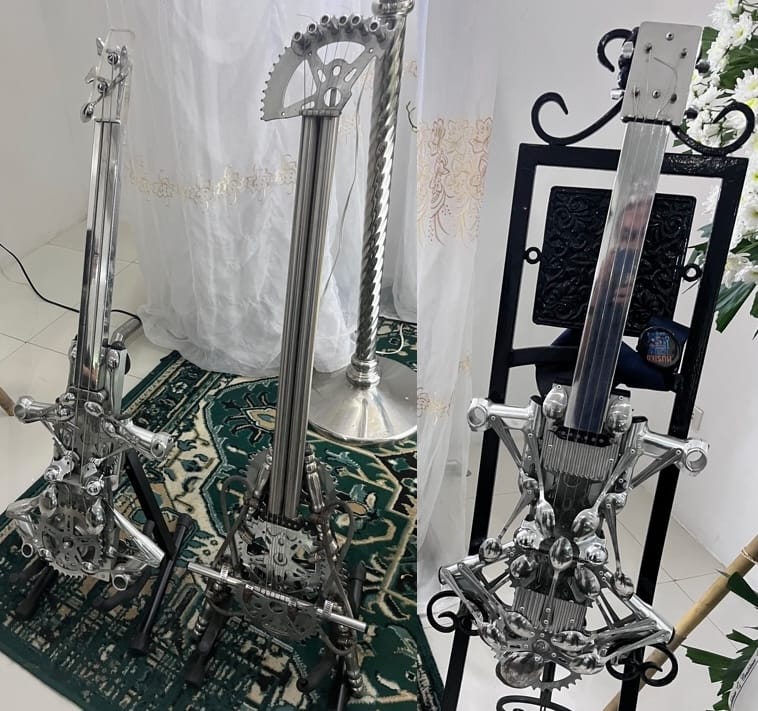
Locally, Salvador made industrial music not only a feast for the ears but also for the eyes. He creatively constructs his own musical instruments from scrap metal, water pipes, bicycle parts, discarded electrical materials, and kitchenware—creating visually engaging mesh-metal sculptures more fitting for an art museum than a sound stage.
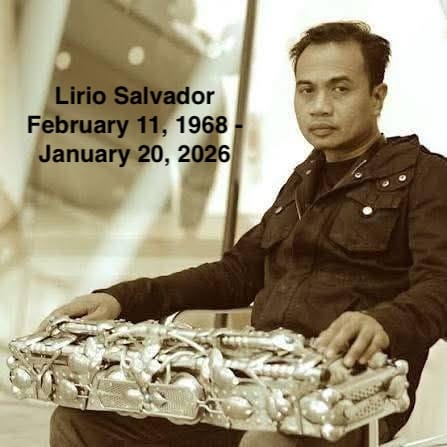
“It took almost 20 years in the Philippines for people to appreciate the existence of sound art. I won’t be surprised if it takes another 20 years before most of them actually understand it,” Salvador said.
Another pioneer of music deconstruction in the country, The Children of Cathode Ray, has been producing sound art since 1989. Group member Tad Ermitaño described their music on the autoceremony blog (autoceremony.blogspot.com): “A Cathode Ray piece might have radios and four-second cassette-tape loops feeding into a mix filled with drums and electronic percussion, effected guitars, synthesized pads, and passionate raving in an invented language, which would in turn be augmented visually by video feedback, projections of exposed Super-8 abraded with a variety of kitchen implements, or VHS spliced on a pair of consumer VCRs.”
To paraphrase a familiar art adage: Music is in the ear of the beholder.
NOTE: This article first appeared in the July 31, 2006, issue of Tech Times, the infotech section of The Manila Times.
Watch sound artist Lirio Salvador perform with Japanoise artist Toshiyuki Seido in 2009.
———-
WATCH TECHSABADO ON OUR YOUTUBE CHANNEL:
WATCH OUR OTHER YOUTUBE CHANNELS:
PLEASE LIKE our FACEBOOK PAGE and SUBSCRIBE to OUR YOUTUBE CHANNEL.
PLEASE LIKE our FACEBOOK PAGE and SUBSCRIBE to OUR YOUTUBE CHANNEL.