BUSINESS | APAC logistics costs rise 18.9% as AI adoption accelerates
The study gathered insights from more than 500 logistics leaders and operators across 24 Asia-Pacific economies. It was supported by the Asian Supply Chain Logistics Alliance and the Supply Chain Management Association of the Philippines.
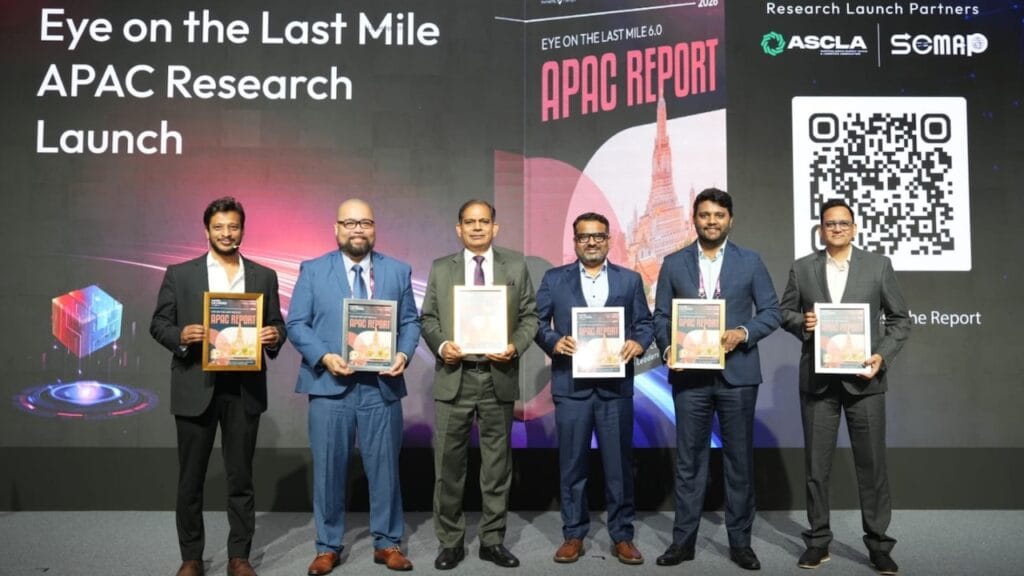
Logistics operators across the Asia-Pacific region are facing rising delivery costs and increasing pressure to modernize last-mile operations, according to a new report released during the Last Mile Leaders Asia 2026 summit in Bangkok.
The “Eye on the Last Mile 6.0: APAC Report 2026” by FarEye found that average delivery costs in the region increased by 18.9% year-on-year, with 75% of logistics operators identifying inefficient routing as the industry’s biggest operational bottleneck. Other challenges cited included driver shortages, visibility gaps, complex returns and manual carrier audits.
The study gathered insights from more than 500 logistics leaders and operators across 24 Asia-Pacific economies. It was supported by the Asian Supply Chain Logistics Alliance and the Supply Chain Management Association of the Philippines.
The report said customer expectations are also shifting, with consumers preferring predictable delivery windows over faster shipping by nearly two-to-one. Around 60% of operators surveyed said customers are willing to pay more for guaranteed delivery reliability.
“Across APAC, the last mile is no longer being measured purely on speed or cost,” said Kushal Nahata. “Customer experience, operational efficiency, and delivery economics are becoming deeply interconnected.”
The report also showed rapid adoption of artificial intelligence across the logistics sector. About 98.3% of logistics leaders surveyed expressed trust in AI-driven decision-making, with companies increasingly using AI for routing, dispatching, ETA prediction, exception management and carrier selection.
According to the study, APAC logistics providers are adopting AI faster than counterparts in North America and Europe. However, implementation challenges remain due to legacy infrastructure, poor data quality and internal capability gaps.
“The future of logistics in Southeast Asia will depend heavily on how well ecosystems work together,” said Rob Locke, citing the need for stronger collaboration among carriers, retailers, technology providers and fulfillment operators.
FarEye said companies capable of integrating fragmented delivery networks into connected and predictable systems are expected to gain a competitive advantage as regional supply chains become more complex.
————————————————————————-
TEN YEARS OF TECHSABADO!
PLEASE LIKE our FACEBOOK PAGE and SUBSCRIBE to OUR YOUTUBE CHANNEL.
WATCH TECHSABADO ON OUR YOUTUBE CHANNEL:
WATCH OUR OTHER YOUTUBE CHANNELS:
PLEASE LIKE our FACEBOOK PAGE and SUBSCRIBE to OUR YOUTUBE CHANNEL.