TELECOM | Filipino 5G users seek guaranteed network performance
The study, “Winning in the Market with Differentiated Connectivity Offerings,” found that 60% of 5G users in the Philippines identify situations where guaranteed connectivity would be valuable, compared with 40% globally.
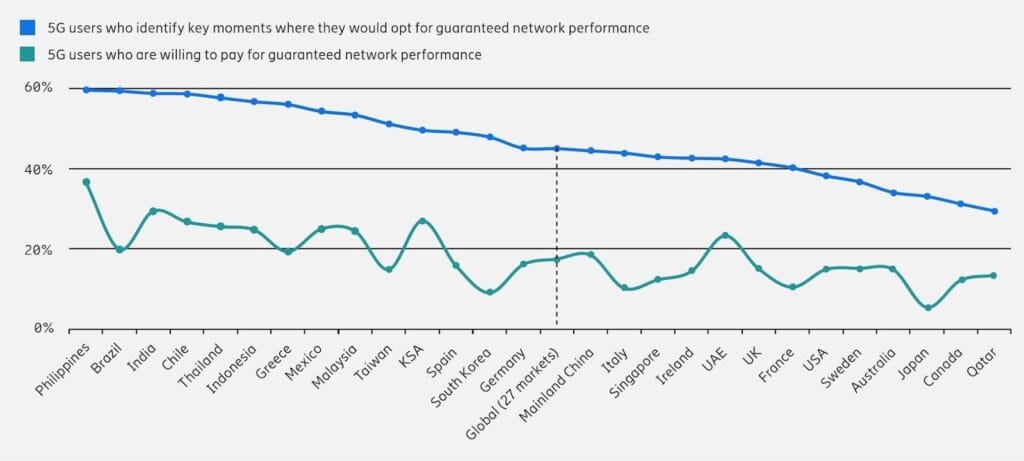
Six in 10 Filipino 5G smartphone users see value in guaranteed network performance during critical moments, according to a global study by Ericsson ConsumerLab that points to growing demand for differentiated mobile connectivity.
The study, “Winning in the Market with Differentiated Connectivity Offerings,” found that 60% of 5G users in the Philippines identify situations where guaranteed connectivity would be valuable, compared with 40% globally.
The research surveyed 43,000 smartphone users across 27 markets, including about 34,000 active 5G users. In the Philippines, the study was based on interviews with 1,500 consumers, including 900 active 5G subscribers, and is statistically representative of 46 million smartphone users.
The study also found that 36% of Filipino 5G users are willing to pay a premium for guaranteed Quality of Service (QoS). Ericsson said this could provide communication service providers with up to two months of additional average revenue per user.
“Filipino consumers show a strong appetite for guaranteed 5G performance, with over a third ready to pay a premium for uninterrupted connectivity during critical moments,” said Daniel Ode, head of Ericsson Singapore, Brunei and Philippines.
“As on-the-go AI adoption and multimodal apps accelerate, expectations around responsiveness will only intensify,” Ode said.
The study found that 36% of Filipino 5G users prefer to purchase differentiated connectivity directly from their service provider, while 25% are open to alternative models, including connectivity capabilities embedded in third-party applications.
Ericsson said demand for differentiated connectivity is also being driven by the increasing use of artificial intelligence on smartphones.
Among current smartphone AI users, response time has twice the impact on overall network satisfaction compared with other 5G subscribers, according to the study.
Daily multimodal AI engagement is projected to increase from 16% of users currently to 32% by 2030, while 44% of AI activity is expected to occur on the go.
Video-based AI interactions are also projected to increase from 22% to 51%, according to the research, as users increasingly rely on visual and video inputs rather than traditional text prompts.
Ericsson said programmable network APIs, including Quality on Demand, could allow telecommunications providers to offer connectivity tailored to specific applications and services.
The approach could support differentiated service tiers, performance add-ons and other pricing models based on specific connectivity requirements.
The survey was conducted from June to August 2025 among active smartphone users aged 15 to 69 across 27 markets.
Full disclosure: All news articles published on the TechSabado website are written by human journalists, unless otherwise specified. Final text editing is also performed by human editors, with artificial intelligence (AI) used only to assist with additional grammar and style guide corrections..
————————————————————————-
TEN YEARS OF TECHSABADO!
PLEASE LIKE our FACEBOOK PAGE and SUBSCRIBE to OUR YOUTUBE & SPOTIFY channels.
WATCH TECHSABADO ON OUR YOUTUBE CHANNEL:
WE ARE ALSO ON SPOTIFY

WATCH OUR OTHER YOUTUBE CHANNELS:
PLEASE LIKE our FACEBOOK PAGE and SUBSCRIBE to OUR YOUTUBE CHANNEL.