SPECIAL FEATURE | Blockchain revisited: From origins to the Philippine connection
Cryptocurrency is blockchain’s first mass-market application, and the Philippines has become one of its most active testing grounds.
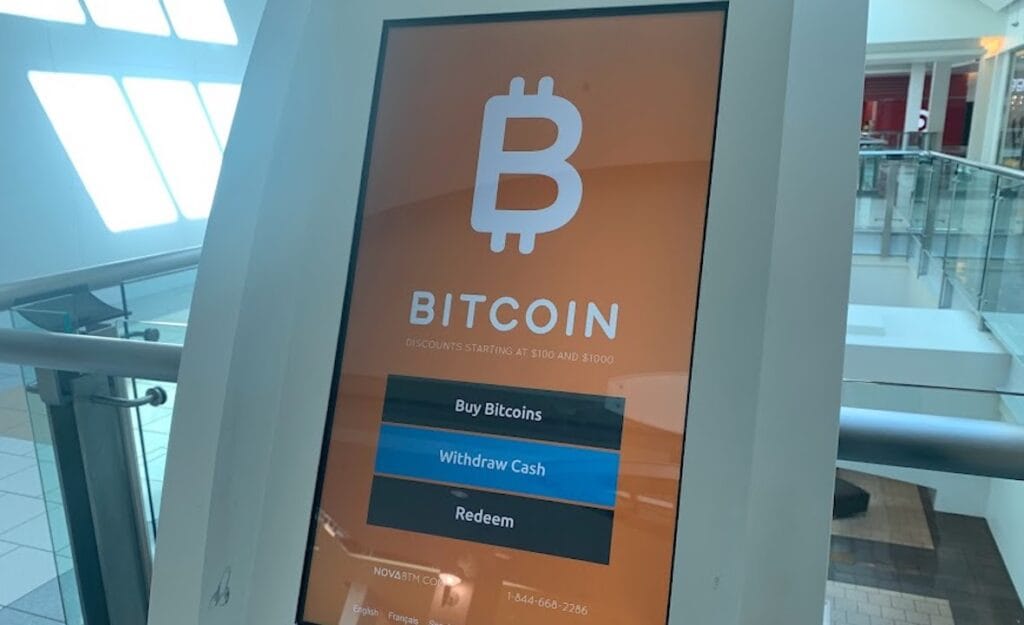
TechSabado.com file photo
The modern blockchain story begins in October 2008, when the pseudonymous Satoshi Nakamoto published the Bitcoin white paper proposing a way to solve digital cash’s “double-spend” problem with a peer-to-peer network that timestamps transactions into chained “blocks.” The design removes a central authority by letting honest nodes out-compute attackers, securing the ledger as long as the majority of computing power follows the rules.
In the years that followed, developers realized the same tamper-resistant ledger could do more than move coins. Vitalik Buterin’s 2014 Ethereum paper generalized blockchains with “smart contracts,” small programs that run on the network and can automate agreements and financial logic. Cryptographer Nick Szabo had already laid the conceptual groundwork in the 1990s, describing “smart contracts” as promises specified in code.
The U.S. National Institute of Standards and Technology later defined blockchain as a collaborative, tamper-resistant ledger where transactions are grouped into blocks and linked cryptographically. This blend of cryptography and distributed consensus underpins why blockchains matter: They let multiple parties share a trusted record without a central gatekeeper.
Crypto rails, financial access
Cryptocurrency is blockchain’s first mass-market application, and the Philippines has become one of its most active testing grounds. The Bangko Sentral ng Pilipinas (BSP) has licensed dozens of “virtual asset service providers,” or VASPs, which can legally exchange fiat and crypto. In its regulatory circulars, the BSP has stressed that blockchain-based remittance and payment platforms must follow anti-money laundering rules, consumer safeguards, and transaction monitoring. This framework aims to capture crypto’s efficiency while curbing its risks.
For everyday Filipinos, remittances are the clearest link between blockchain and daily life. The Philippines is the world’s fourth-largest recipient of remittances, according to the World Bank, with inflows topping $36 billion in 2024. Blockchain-powered services promise to cut costs in a market where fees average around 6.5%. Strike, using the Bitcoin Lightning Network, has partnered with Pouch.ph to send U.S. dollars that arrive as pesos in Philippine accounts. Coins.ph, a licensed VASP with millions of users, also integrated Lightning to make deposits faster and cheaper.
These experiments show the potential for Filipinos who depend on monthly remittances from relatives abroad. The savings may be modest per transaction, but multiplied across millions of families, the collective impact is significant.
Digital currencies
The BSP is also part of the global conversation on central bank digital currencies (CBDCs). In 2022 it launched “Project CBDCPh” to study wholesale applications of blockchain-based money rails. While the central bank has been cautious about issuing a retail CBDC, it continues to participate in international pilot programs coordinated by the Bank for International Settlements, including regional cross-border settlement experiments. For the Philippines, the priority is ensuring that blockchain innovations align with financial stability, consumer protection, and the push for digital inclusion.
Globally, blockchain markets have matured. The U.S. SEC’s 2024 approval of spot bitcoin exchange-traded products brought institutional money into crypto. BlackRock’s tokenized Treasuries fund became one of the largest tokenized assets on chain by 2025. Bitcoin’s market cap hovered around $2.23 trillion in late September 2025, with prices above $112,000. Ethereum remains second in scale, now operating under proof-of-stake consensus.
But risk persists. Billions have been lost to smart contract bugs, bridge exploits, and exchange hacks. The FBI has linked several high-profile thefts to North Korean groups, while analytics firm Chainalysis estimates bridge hacks alone cost $2 billion in 2022. These vulnerabilities matter in the Philippines too, where the BSP reminds licensed exchanges to maintain strict cybersecurity standards and custodial safeguards.
A double-edged sword
Advocates highlight blockchain’s role in financial inclusion. In a country with uneven banking access, mobile-first crypto wallets let rural users receive funds quickly. The same properties that enable remittance efficiency could extend to microfinance, agricultural supply chains, and government aid disbursement. Yet the risks are clear: speculative mania, scams, and hacks can wipe out savings. The BSP has repeatedly issued advisories warning consumers to deal only with registered platforms.
The environmental debate is another fault line. Bitcoin’s proof-of-work consumes significant energy, though Ethereum’s shift to proof-of-stake drastically cut its footprint. For an archipelago already vulnerable to climate change, the sustainability of blockchain projects is not just an ethical question but a policy one.
Blockchain has moved far from its cypherpunk origins into the mainstream of finance, regulation, and remittances. But the technology remains double-edged: efficient, inclusive, and transparent on the one hand, but volatile, hack-prone, and environmentally contentious on the other. Whether blockchain becomes plumbing that powers finance in the background—or another speculative bubble that bursts—will depend on execution, governance, and regulation. In the Philippine context, where remittances are a lifeblood and financial inclusion a national goal, blockchain’s future may well be decided in the hands of regulators, innovators, and the millions of families who rely on money sent from abroad.
———-
WATCH TECHSABADO ON OUR YOUTUBE CHANNEL:
WATCH OUR OTHER YOUTUBE CHANNELS:
PLEASE LIKE our FACEBOOK PAGE and SUBSCRIBE to OUR YOUTUBE CHANNEL.
PLEASE LIKE our FACEBOOK PAGE and SUBSCRIBE to OUR YOUTUBE CHANNEL.