BURNING CHROME | Resonances and revolutions — from noise to art (Part 2)
If there is one truth in sound art, it’s this: absence of recognition does not equal absence of value.
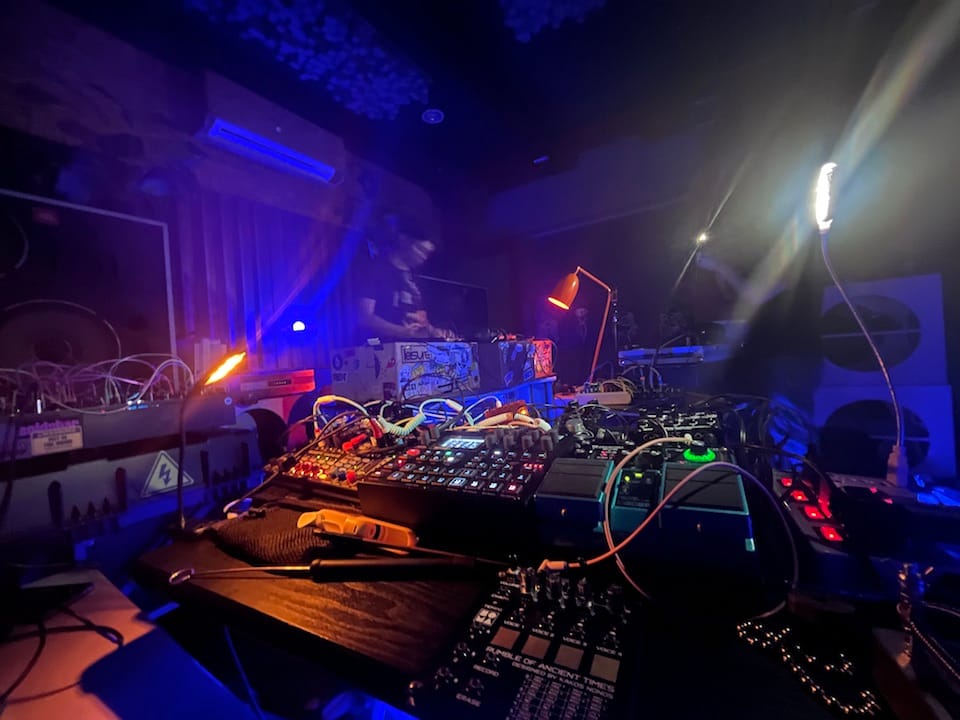
If the first generation of Philippine sound artists wrestled with obscurity and skepticism, the next wave embraced community-building. The mid-2000s gave rise to one of the most influential hubs for experimental practice: the WSK Festival of the Recently Possible, founded by Tengal Drilon. What began as a loosely organized gathering of media artists and experimental musicians evolved into a full-fledged international festival. WSK didn’t just showcase performances; it fostered collaborations, workshops, residencies, and discourse. It was, and remains, the country’s most visible platform for sound and media art, positioning Manila on the map of global experimental culture.
Drilon’s vision was not merely to stage events but to establish infrastructure—digital and physical—that could support artists long after the festival ended. By doing so, WSK became a cultural bridge between Manila, Berlin, Jakarta, and Tokyo, tying the Philippines into a network where sound was no longer just an art form but a form of cultural diplomacy.
Meanwhile, individual practitioners carved their own paths. Caliph8, one of Manila’s most inventive DJs and producers, launched Subflex, a project where hip-hop, turntablism, and noise collided. Subflex wasn’t about pleasing the crowd; it was about testing the limits of rhythm and texture, pulling experimental sound into dialogue with urban music. In a country where mainstream pop dominates airwaves, Caliph8’s insistence on experimental practice within popular genres was itself a radical gesture.
Jon Romero (also of Elemento), another pioneer, worked at the crossroads of performance art and sonic experimentation together with his gang of Ruthless collectives. His performances often blurred ritual and improvisation, forcing audiences to reckon with sound not as entertainment but as confrontation. He represented a lineage of artists who viewed sound as a mode of resistance, a way of expressing unease in a society often saturated with escapist media.
Japanese artists, too, left their mark on Manila’s underground. Japanoise figures like Toshiyuki Seido brought the extremities of noise performance to local stages, inspiring Filipino counterparts to push their own thresholds of loudness and chaos. These exchanges underscored how porous borders had become in experimental practice. What once seemed confined to Tokyo basements now reverberated in Cubao X’s cramped art houses or Intramuros’ claustrophobic tunnels.
Collectives also emerged with more formal frameworks. One such group, NØNRANDØM, curated by Paolo De Silva, gathered experimentalists who refused to accept rigid definitions of sound art. Their projects, ranging from field recording compilations to multi-channel installations, were serious attempts to document a movement in danger of slipping into oblivion. In its August 2025 issue, The Wire published an article by Simon Coates that spotlighted NØNRANDØM as emblematic of the Philippines’ experimental ethos: decentralized, restless, and unafraid of failure. The fact that an influential UK magazine gave space to a Filipino collective was itself an acknowledgment that the local scene had matured to global relevance.
Documentation remained a critical challenge, and the role of writers cannot be understated. Again, as a practicing journalist and, more often than not, a reclusive sound artist, my personal Blogspot essays in the early and mid-2000s tracked local performances and global sound trends, essentially creating what could have been one of the first online chronicles of Philippine sound art. Long before social media made documentation easier, these posts offered context and continuity for a scene that might otherwise have disappeared into oral history. They also framed Philippine sound practice not as an isolated curiosity but as part of a larger international conversation.
But even as documentation improved, sustaining the work was still a grind. Funding was scarce, audiences were small, and institutions often dismissed sound practice as peripheral. This was where academics like Dr. Dayang Yraola, Ph.D., stepped in. At the Center for Ethnomusicology in the University of the Philippines in Diliman, as mentioned in the earlier article, she spearheaded initiatives such as Sonic Manila Research and Listen to My Music. These projects didn’t just showcase sound art; they archived, theorized, and reframed it so universities, galleries, and cultural agencies could recognize its value. Yraola is now an official for the Department of Theory at the College of Fine Arts, also in UP.
Her work also echoed the earlier explorations of Jose Maceda, the late National Artist for Music, whose ethnomusicological research and avant-garde compositions had already expanded how Filipinos thought about sound. Maceda’s massive works—where hundreds of performers played gongs, bamboo instruments, or radios simultaneously—challenged Western ideas of composition and performance. Yraola’s curatorial efforts, building on that lineage, effectively translated underground noise into cultural capital, ensuring sound art’s preservation and giving it a place in the country’s formal arts infrastructure.
Looking at this constellation—Elemento’s sculptural instruments, Children of Cathode Ray’s video-noise explorations, autoceremony’s pastoral drone rituals, Caliph8’s Subflex experiments, Jon Romero’s confrontational performances, Seido’s Japanoise incursions, NØNRANDØM’s collective strategies, Yraola’s curatorial frameworks, my early writings, Drilon’s WSK festival—it becomes clear that Philippine sound art is not a fringe curiosity. It is an ecosystem, fragile but alive, fueled by persistence as much as by creativity.
Where does it go from here? The global scene suggests a trajectory. Spatial audio technologies are becoming cheaper; immersive installations are increasingly in demand. Museums are more open to sound as a primary medium. Streaming platforms have democratized distribution, even if algorithms still privilege pop. Meanwhile, climate change, urban stress, and political upheavals provide new material and urgency for sound practice. In Southeast Asia, where histories are layered and contested, sound becomes a powerful tool for storytelling, remembrance, and resistance.
The Philippines has everything it needs to lead in this space: a generation of artists unafraid of failure, curators and academics willing to fight for institutional space, and a tradition of improvisation deeply embedded in its cultural DNA. What it lacks in funding or mainstream visibility, it makes up for in resilience. To borrow from John Cage, the Philippines’ sound artists have made it clear: everything we hear is potential music, and everything unheard is waiting for us to listen.
This is not a movement for mass popularity. Sound art and experimental music will always occupy the margins. But margins can be fertile. They can shape culture in ways that commercial music cannot. They remind us that listening is not just about melody, rhythm, or lyrics, but about attention, context, and presence. And in that sense, the Philippines is not behind but right in step with the world, resonating in its own frequency, making noise that matters.
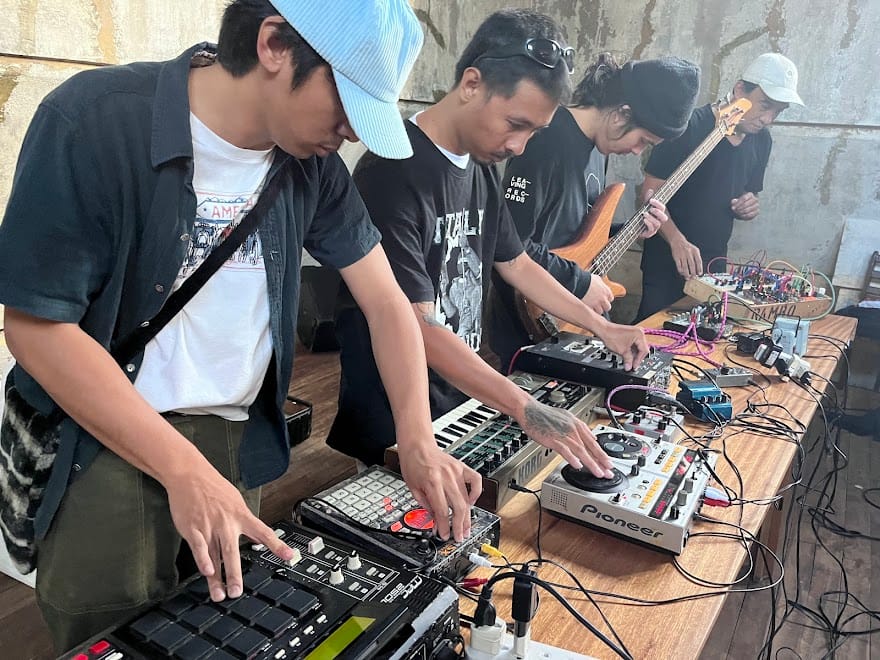
WATCH: ‘TODAY IS TUESDAY’ on Youtube where we talk about sound art and experimental music every last Tuesday of the month.
———-
WATCH TECHSABADO ON OUR YOUTUBE CHANNEL:
WATCH OUR OTHER YOUTUBE CHANNELS:
PLEASE LIKE our FACEBOOK PAGE and SUBSCRIBE to OUR YOUTUBE CHANNEL.
PLEASE LIKE our FACEBOOK PAGE and SUBSCRIBE to OUR YOUTUBE CHANNEL.

![[Photo 2] Kumusta from Strava](https://techsabado.com/wp-content/uploads/2026/04/Photo-2-Kumusta-from-Strava-300x129.png)


1 thought on “BURNING CHROME | Resonances and revolutions — from noise to art (Part 2)”