BUSINESS TECH | Vertiv expands UPS capacity for AI data centers in Asia
The new model extends the PowerUPS 9000 platform’s capacity range to 250 kilowatts to 1.25 megawatts, with the expanded range now available across Southeast Asia, Australia and New Zealand, according to Vertiv.
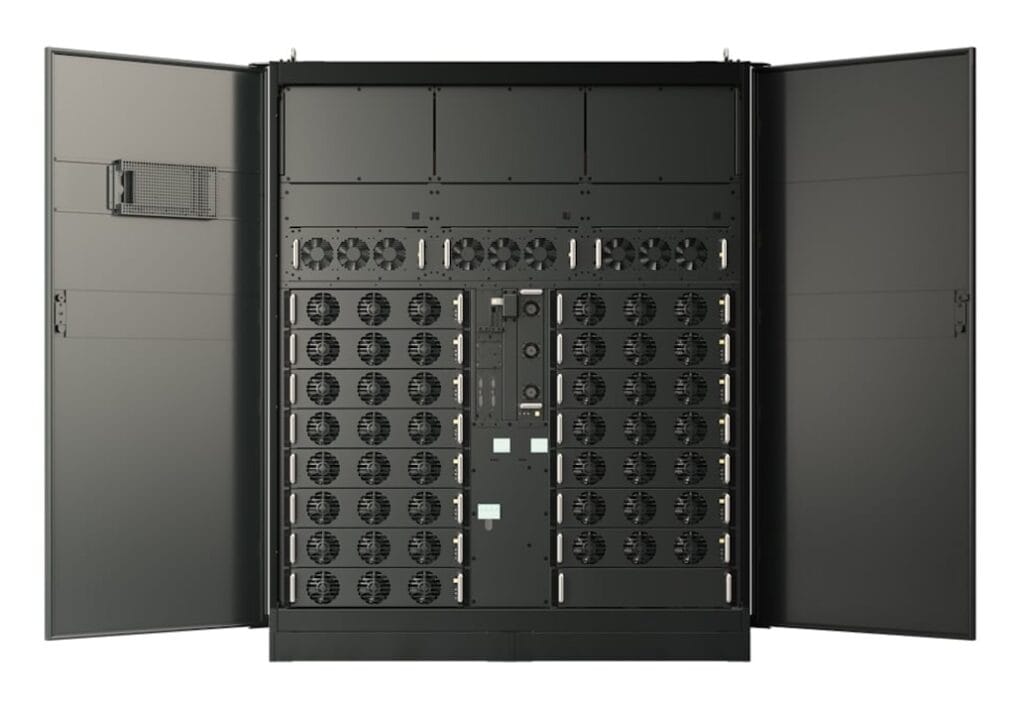
Technology infrastructure provider Vertiv has expanded its PowerUPS 9000 uninterruptible power supply (UPS) family with a 1.8-megawatt model designed for large-scale data centers, artificial intelligence (AI) workloads and other critical digital infrastructure in Asia.
The new model extends the PowerUPS 9000 platform’s capacity range to 250 kilowatts to 1.25 megawatts, with the expanded range now available across Southeast Asia, Australia and New Zealand, according to Vertiv.
The 1.8-megawatt UPS incorporates controls intended to manage rapid power fluctuations associated with AI workloads. Battery Shield technology is designed to reduce unnecessary battery cycling during sudden load changes, while Input Power Smoothing is intended to make input power flow more predictable and reduce stress on upstream electrical infrastructure.
The system also uses state-of-charge management to help maintain battery availability for backup operations.
Vertiv said AI workloads can cause rapid changes in power demand. GPU clusters can move from low utilization to peak demand within milliseconds, potentially affecting batteries, switchgear, generators, transformers and upstream utility infrastructure.
Tony Gaunt, vice president for product management at Vertiv Asia, said the expansion addresses the changing power requirements of AI data centers.
“AI is fundamentally changing data center infrastructure requirements across Asia, driving demand for higher-density power systems that can respond faster and manage the effects of these dynamic AI workloads,” Gaunt said.
Arunangshu Chattopadhyay, director of AC power and power distribution at Vertiv Asia, said conventional UPS systems face challenges from rapid and repeated load changes in GPU environments.
“Traditional UPS systems were not designed for the rapid and repetitive load transitions created by modern GPU environments,” Chattopadhyay said.
The company said it tested the control technologies using its proprietary AI load simulator across multiple AI workload profiles, battery configurations, duty cycles and fluctuation ranges. Vertiv said the tests showed stable input current behavior despite variations in output.
In Singapore, Vertiv also worked with STT Singapore on testing intended to replicate AI infrastructure conditions, including rapid load transitions and coordination among UPS operations, energy storage systems and upstream power infrastructure.
The PowerUPS 9000 1.8-megawatt model is designed with a high-power-density architecture for data centers dealing with increasing rack densities and limited white space. Vertiv said the system also focuses on energy efficiency, serviceability and deployment flexibility.