Hong Kong is seeking to strengthen its position as a global financial hub by integrating artificial intelligence (AI), regulated stablecoins and tokenized assets into mainstream financial services, as industry leaders identify cross-border payments, corporate treasury management and institutional settlement as potential drivers of adoption.
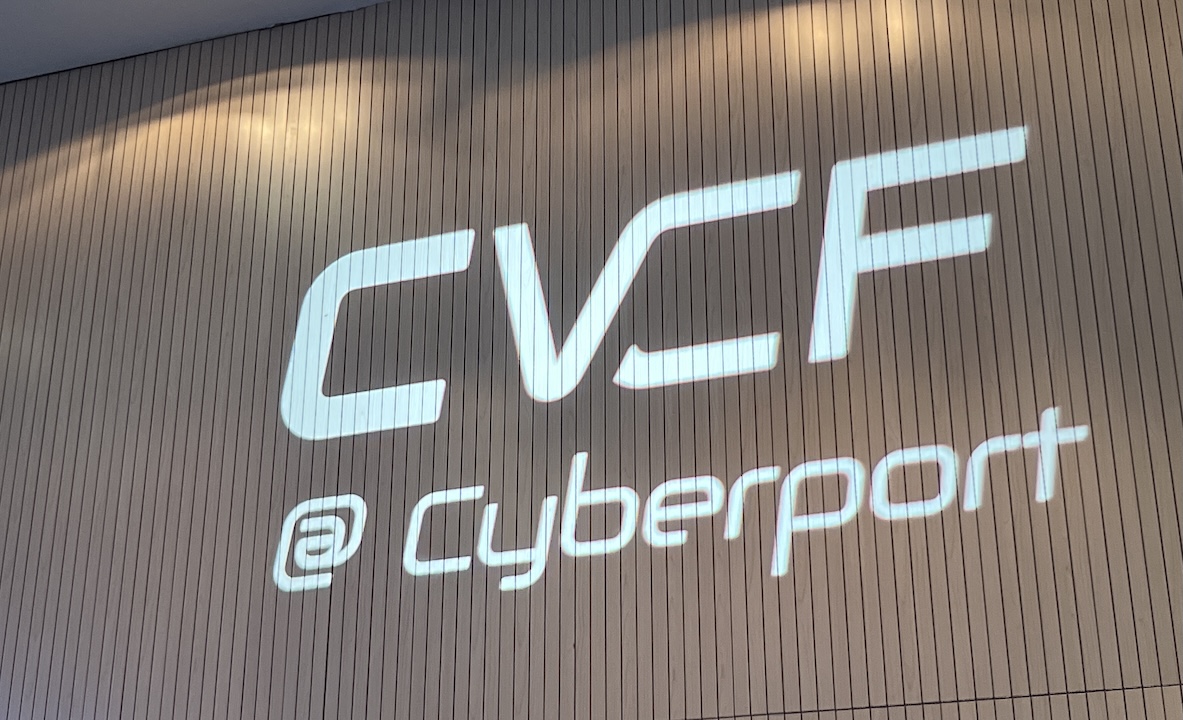
The discussions took place during the Cyberport Venture & Capital Forum 2026, held Nov. 4 and 5 at Hong Kong Cyberport. The two-day event gathered more than 80 global venture capitalists, entrepreneurs and industry leaders under the theme “Scaling in a Changing World: Winning the Next Competitive Cycle.”
The forum examined how AI, digital assets and tokenization could reshape financial markets, business operations and investment flows, while highlighting Hong Kong’s role as a potential gateway connecting mainland China, Southeast Asia, the Middle East and other global markets.
In his welcome remarks, Cyberport CEO Dr. Rocky Cheng said the convergence of AI and digital assets was changing how businesses operate and how financial transactions are conducted. He identified three major challenges: establishing trust in transactions performed by AI agents, moving tokenized money and stablecoins toward wider adoption, and determining the role of human workers as AI reduces transaction costs.
AI agents could eventually select products, compare prices and complete cross-border purchases and payments with minimal human intervention, Cheng said. Such transactions would require reliable digital identities, programmable currencies and clear authorization mechanisms to ensure that machines act within the limits set by their owners.
“When smart bodies represent us in transactions, where should this trust come from?” Cheng asked, referring to AI agents acting on behalf of customers.
He also questioned how people could maintain a competitive advantage as individuals increasingly gain access to AI teams capable of assisting with product development and business operations.
Cheng said Hong Kong’s challenge was no longer simply issuing digital assets but ensuring that stablecoins and tokenized assets could circulate widely and become part of ordinary business operations and people’s daily lives.
Cyberport has about 2,400 technology companies, including more than 500 focused on AI, big data and robotics, more than 330 in Web3 and digital assets, and more than 400 financial technology companies, Cheng said. Its supercomputing center accounts for 60% of Hong Kong’s market computing power, according to his remarks.
Cyberport is also working with the Financial Services and the Treasury Bureau on programs supporting Web3 and digital asset development, including initiatives intended to connect technology companies with commercial applications.
Tokenization could reshape financial centers
A keynote presentation at the forum argued that the development of AI and tokenization could force traditional international financial centers to evolve into interconnected global financial networks.
The speaker said digital finance was increasingly moving beyond national and jurisdictional boundaries. Financial services would also have to accommodate machines, robots and AI agents as economic participants, creating a need for forms of money that could be used by automated systems.
“Digital finance may face cross-industry integration,” the speaker said.
The presentation identified four characteristics of a financial system adapted to digital finance: distributed-ledger-based clearing and settlement, tokenization of both money and assets, an integrated on-chain financial ecosystem, and continuous 24/7 market operations.
Under this model, tokenized deposits, central bank digital currencies and stablecoins would form part of the digital money infrastructure, while stocks, bonds and investment funds could also be represented as tokens.
The speaker said distributed ledgers could enable real-time, peer-to-peer settlement, allowing financial markets to operate continuously rather than relying on conventional banking and settlement schedules.
The presentation warned that financial centers that fail to adapt could lose liquidity, investment and influence over the pricing of financial assets.
It cited anticipated infrastructure investments in the United States and China, particularly in AI and advanced manufacturing, as evidence of growing competition for global capital. The speaker estimated that US AI infrastructure investment could reach $1 trillion over 10 years, while China’s projected investment in its Industry 5.0 development could reach about $1.2 trillion.
Hong Kong, the speaker argued, could use its position as a financial gateway to mainland China, together with Stock Connect, Bond Connect and Wealth Management Connect, to distinguish itself from competing financial centers.
However, it would need deeper liquidity, more efficient trading and settlement systems, better credit facilities and stronger interoperability among blockchain networks.
Stablecoins move toward commercial applications
The forum’s panel discussion on HKD stablecoins focused on how regulated digital currencies could move beyond issuance and trading toward recurring commercial and institutional use.
A representative of distributor Fineweb said distributors had responsibilities beyond making stablecoins available to users. These included minting and burning, subscriptions, redemptions, compliance and connecting traditional payment providers with merchants and businesses.
The representative said the platform had onboarded more than 3,000 global companies and was working with payment providers to support corporate treasury management and cross-border transactions.
One application involved using HKDAP, a Hong Kong dollar stablecoin, as a settlement currency for a corporate client. The distributor was also exploring ways to connect stablecoins with tokenized real-world assets, including money market funds and structured products.
A representative of HashKey said the exchange’s clients were seeking regulated and secure access to digital assets, alongside more efficient ways to settle transactions.
HashKey introduced HKDAP distribution in response to client demand and later enabled deposits and withdrawals through a whitelisted wallet system, the representative said.
The company was also exploring the use of HKDAP to settle commercial insurance premiums through a collaboration involving HashKey, securities firm Anchorpoint and insurance company OneDegree.
The proposed arrangement could provide a source of recurring stablecoin demand through insurance payments and renewals, although it remained under discussion with regulators.
The HashKey representative also identified collateral as a potential application over the next two to three years. Stablecoins could become eligible collateral for leveraged trading and other financial activities, provided regulatory requirements were met.
Another panelist discussing the institutional banking perspective said the longer-term opportunity could extend to rebuilding parts of the financial system on-chain, including bilateral settlements and repurchase agreements.
A separate speaker said Hong Kong’s stablecoin model would develop differently from those in Western markets because regional business requirements and financial structures were distinct.
The speaker pointed to internal treasury operations and interbank settlement as potential applications, arguing that tokenized money could enable faster transactions without the delays associated with conventional payment systems.
However, the panelist cautioned against treating stablecoins as a universal financial solution.
“The stablecoin isn’t going to fix every problem. It’s a settlement tool, right? It’s not more, it’s not less,” the speaker said.
The broader opportunity, the speaker added, would come from combining stablecoins with tokenized money market funds and other digital assets to improve capital efficiency and enable faster movement between financial instruments.
Cyberport expands investment and regional partnerships
Beyond the financial technology discussions, Cyberport reported that its startup community had raised more than HK$74.5 billion in cumulative funding and welcomed 19 listed companies and two unicorns over the past year.
The Cyberport Investors Network marked its ninth anniversary, reporting more than HK$6 billion in cumulative funding facilitated. Cyberport also cited the Cyberport Macro Fund’s investments in 30 startup projects as of September 2026, with total investments and co-investments exceeding HK$2.7 billion.
During the forum, Cyberport signed memorandums of understanding with Gobi Partners and Thailand’s National Innovation Agency to support cross-border investment, startup development and market expansion.
The agreement with Gobi Partners aims to strengthen cooperation in investment opportunities and innovation ecosystems across Hong Kong, Asia and the Middle East. Gobi has invested in more than 24 Cyberport companies, including through co-investments.
The agreement with Thailand’s National Innovation Agency covers collaboration in AI, smart city technologies and other digital technologies, including business matching, market expansion, innovation programs and pilot projects.
The forum also featured venture capital discussions, investor matching sessions, startup showcases and founder pitches. Its second day included the Agentic Economy Summit, which examined how agentic AI could reshape business and how digital assets could change the movement of value through digital identity, institutional tokenization, HKD stablecoins, programmable payments and machine-to-machine commerce.
The discussions pointed to a common challenge for Hong Kong’s digital finance ambitions: turning regulated digital assets and emerging technologies into practical infrastructure that businesses and institutions can use regularly. Regulatory clarity, liquidity, interoperability and real commercial demand will determine whether the initiatives can move beyond pilot projects and achieve wider adoption.
Full disclosure: All news articles published on the TechSabado website are written by human journalists, unless otherwise specified. Final text editing is also performed by human editors, with artificial intelligence (AI) used only to assist with additional grammar and style guide corrections..
————————————————————————-
TEN YEARS OF TECHSABADO!
PLEASE LIKE our FACEBOOK PAGE and SUBSCRIBE to OUR YOUTUBE & SPOTIFY channels.
WATCH TECHSABADO ON OUR YOUTUBE CHANNEL:
WE ARE ALSO ON SPOTIFY

WATCH OUR OTHER YOUTUBE CHANNELS:
PLEASE LIKE our FACEBOOK PAGE and SUBSCRIBE to OUR YOUTUBE CHANNEL.




Leave a Reply