SPECIAL FEATURE | Pinoys use digital services heavily despite trust gaps
The findings suggest that the Philippine technology market presents a combination of strong digital adoption and significant expectations around reliability, security and accountability.
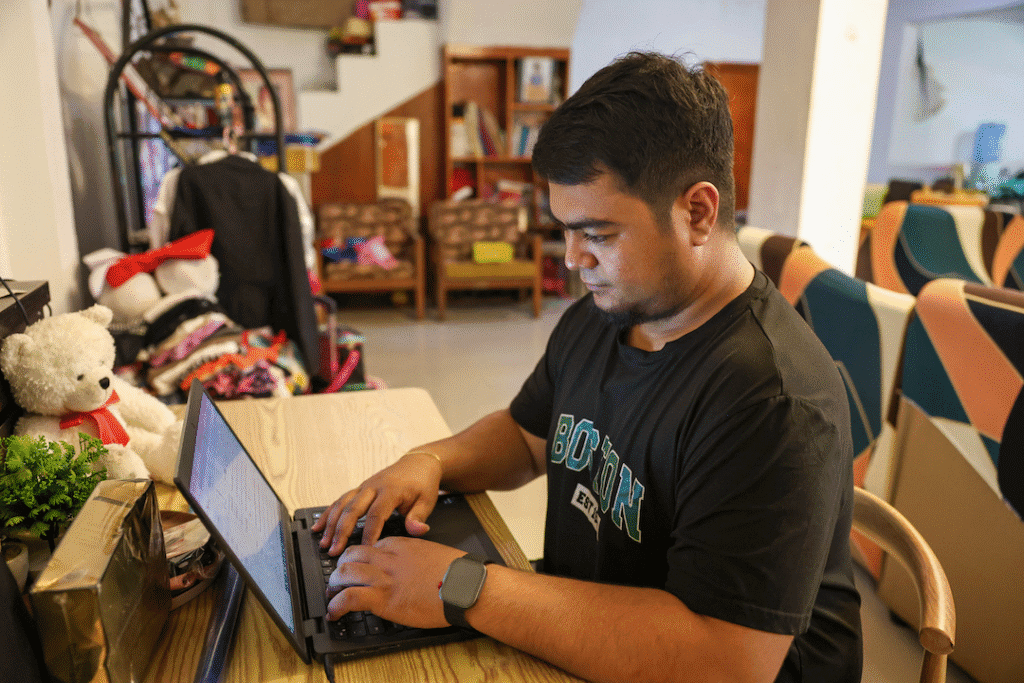
Filipino consumers are among Southeast Asia’s most active users of digital platforms, but high familiarity and frequent use do not always translate into confidence, according to a regional study by Vero and Kadence International.
The Southeast Asia Consumer Tech Trust Score 2026 found that the Philippines recorded some of the region’s highest usage and familiarity levels across several technology categories, while trust remained more uneven. The study was based on an online survey of more than 3,000 consumers across Indonesia, Malaysia, the Philippines, Singapore, Thailand and Vietnam, with the data representing the general population in each market by age, gender and region.
The findings suggest that the Philippine technology market presents a combination of strong digital adoption and significant expectations around reliability, security and accountability.
Among the 10 technology categories measured, the Philippines posted an overall Tech Trust Score of 75.3, placing it third among the six markets surveyed, behind Indonesia at 76.4 and Vietnam at 75.7. Malaysia followed at 74.8, while Singapore and Thailand recorded 69.9 and 69.3, respectively.
The study’s category-level data also showed that digital payments had the highest trust score in the Philippines at 81.8, followed by online banking at 81.4, messaging apps at 79.6, ride-hailing and delivery at 75.0, telecom at 76.9, e-commerce at 75.9, cybersecurity at 74.2, cloud storage at 71.7, social media at 69.4 and generative AI at 67.3.
The report stressed that these scores are category-level measures rather than rankings of individual technology brands.
Familiarity does not guarantee use
One of the clearest Philippine findings concerns the difference between knowing a technology and using it regularly.
The Philippines recorded the highest familiarity with digital payments at 78%, but daily use was only 30%, the lowest among the six markets. The report described this as a familiarity-to-usage gap that is nearly twice the regional average.
Online banking showed a similar pattern. Philippine familiarity reached 70%, second only to Malaysia’s 77%, but daily usage was just 22%, the lowest rate across the surveyed markets. The Philippines also had the highest share of nonusers for online banking.
The pattern was different for services that have become more deeply embedded in everyday communication.
Messaging apps had the highest daily usage and familiarity rates among the technology categories. The Philippines led daily messaging-app use at 92%, ahead of Indonesia at 88%, Singapore at 86% and Malaysia at 84%. Philippine trust in messaging apps was also the highest at 38%.
Social media was similarly saturated. The Philippines recorded daily usage of 88%, the highest among the six markets, while familiarity was also high. Yet its Trust Score stood at 69.4, well below financial services and other established digital utilities.
Across the region, social media had a Trust Score of 67.8 despite being used daily by 79% of respondents. The report identified concerns over misinformation, data use, content safety and platform accountability as factors behind the gap between usage and trust.
Gen AI draws interest despite low trust
Generative AI presents another contradiction.
The Philippines had the highest familiarity with generative AI among the six markets at 50%, compared with a regional average of 43% indicated in the study’s category findings. Yet Gen AI remained the least-trusted technology category overall, recording a regional Trust Score of 66.3 and a Philippine score of 67.3.
Despite that low level of confidence, adoption intent is strong.
The study found that 71% of respondents across the region expected to increase their use of generative AI in the next 12 months. Indonesia led at 86%, followed by Vietnam at 81%.
For the Philippines, the broader finding points to a market where exposure to emerging technology can develop faster than confidence in the technology itself.
“Usage is an important signal, but it is not a complete measure of trust,” said Ashutosh Awasthi, director at Kadence International. “The trust-usage gap reveals a more complex relationship between consumers and technology.”
Transparency matters
The study found that consumers across Southeast Asia prioritize transparency when deciding whether a technology company is trustworthy.
Government approval and compliance were the strongest trust proof points in Singapore at 36%, Malaysia at 28% and the Philippines at 23%.
Indonesia differed sharply, with 43% of respondents identifying a proven track record and few incidents as a key signal of trustworthiness. In Thailand and Vietnam, clear, plain-language explanations of data use were each selected by 26% of respondents.
For Philippine consumers, the emphasis on regulatory approval and compliance places particular importance on visible safeguards and accountability.
The study also found that personal data misuse was the biggest technology-related concern across the region, with 49.2% of respondents ranking it as their top concern. Online scams and fraud were more widespread, appearing among the top three concerns for 78.9% of respondents.
The Philippines was among the markets where consumers showed a particularly strong willingness to abandon a service after a serious data breach. Fifty-six percent of Philippine respondents said they would quit immediately following such an incident, the highest proportion among the six markets.
Trust can determine the next stage of adoption
The findings suggest that Philippine technology companies face a different challenge from simply attracting users: they must convert existing usage and familiarity into durable confidence.
The Philippines was also strongly driven by practical benefits when considering new technology. Fifty-nine percent of Philippine respondents said a clear and practical benefit to their daily lives would encourage them to try a new technology or feature, compared with 54% in Malaysia and 74% in Indonesia.
Digital payments had the highest regional intent for increased use at 85%, with the Philippines at 89%. E-commerce ranked second overall, while generative AI reached the top three despite having the lowest Trust Score.
The report concluded that practical value can drive adoption, while credible information and visible safeguards can help turn that adoption into longer-term trust.
For the Philippines, the combination of high usage, strong familiarity and relatively high overall trust provides a substantial base for further digital growth. But the data also shows that familiarity alone is not enough. As consumers increasingly depend on technologies involving money, personal data and automated decisions, the tolerance for failures and unclear accountability is likely to remain low.
As the study puts it, “The higher the stakes, the more trust will matter.”
Full disclosure: All news articles published on the TechSabado website are written by human journalists, unless otherwise specified. Final text editing is also performed by human editors, with artificial intelligence (AI) used only to assist with additional grammar and style guide corrections..
————————————————————————-
TEN YEARS OF TECHSABADO!
PLEASE LIKE our FACEBOOK PAGE and SUBSCRIBE to OUR YOUTUBE & SPOTIFY channels.
WATCH TECHSABADO ON OUR YOUTUBE CHANNEL:
WE ARE ALSO ON SPOTIFY

WATCH OUR OTHER YOUTUBE CHANNELS:
PLEASE LIKE our FACEBOOK PAGE and SUBSCRIBE to OUR YOUTUBE CHANNEL.