COMMUNITY | Project Swipe Safe expands child online safety efforts in Cagayan de Oro
The devices will be used by project facilitators during training sessions and other activities designed to help children develop practical digital safety skills and protect themselves from online abuse, exploitation and violence.
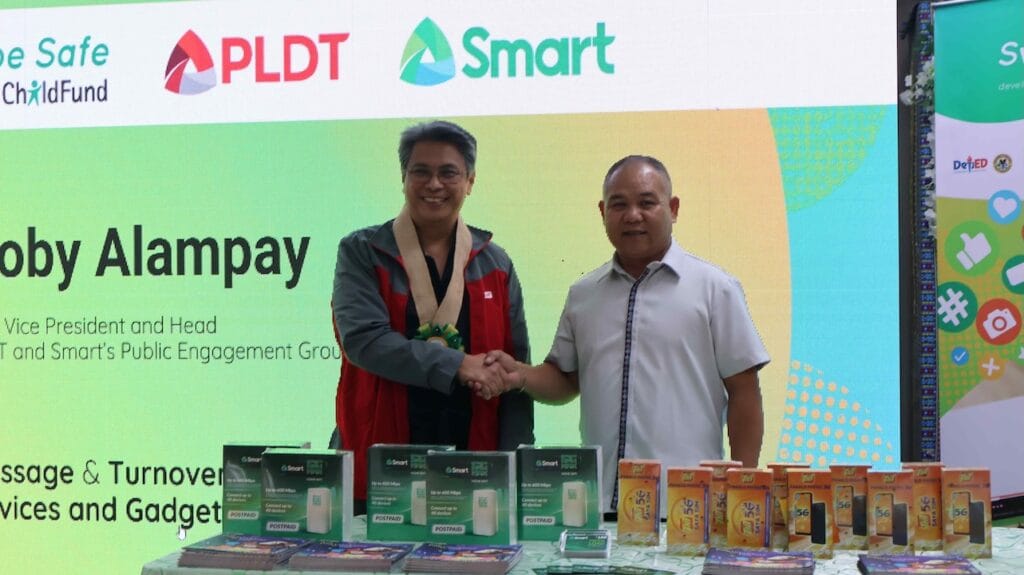
More than 10,000 learners in five public secondary schools in Cagayan de Oro City are expected to benefit from a program aimed at teaching children and young people how to stay safe online, with support from PLDT Inc. and Smart Communications Inc.
PLDT and Smart donated mobile phones and connectivity devices to Xavier Science Foundation Inc. (XSF), which is implementing Project Swipe Safe in partnership with ChildFund Philippines and the City Council for the Protection of Children of Cagayan de Oro City.
The devices will be used by project facilitators during training sessions and other activities designed to help children develop practical digital safety skills and protect themselves from online abuse, exploitation and violence.
“At PLDT and Smart, we promote the use of technology because it enables people to learn, connect, and build communities. But equally important is teaching online safety. By supporting partners like Xavier Science Foundation and initiatives such as Project Swipe Safe, we not only help protect young people but also empower them to become advocates of responsible digital citizenship,” said Roby Alampay, Public Engagement Head at PLDT and Smart.
The project will be rolled out at Mambuaya National High School, PN Roa Sr. National High School, Kauswagan National High School, Lapasan National High School and Cagayan de Oro City High School – Junior High School Campus.
Project Swipe Safe was developed by ChildFund Australia and was first launched in Vietnam before being adopted in several countries across the Asia-Pacific region. The Philippines is the latest country to implement the program, with Cagayan de Oro City serving as its pilot site.
The program uses the Swipe Safe mobile application and training package to teach children about online safety. Participants learn about internet-related risks, develop personal safety plans and practice positive online safety behaviors through guided activities.
“The project helps children learn key concepts about the internet, develop personal safety plans, and practice positive online safety behaviors through engaging and meaningful learning experiences,” said Sheila de Lima, Project Manager of Xavier Science Foundation.
PLDT and Smart said the initiative is part of their efforts to support partnerships aimed at creating safer digital spaces for children and young people.
Full disclosure: All news articles published on the TechSabado website are written by human journalists, unless otherwise specified. Final text editing is also performed by human editors, with artificial intelligence (AI) used only to assist with additional grammar and style guide corrections..
————————————————————————-
TEN YEARS OF TECHSABADO!
PLEASE LIKE our FACEBOOK PAGE and SUBSCRIBE to OUR YOUTUBE & SPOTIFY channels.
WATCH TECHSABADO ON OUR YOUTUBE CHANNEL:
Full disclosure: All news articles published on the TechSabado website are written by human journalists, unless otherwise specified. Final text editing is also performed by human editors, with artificial intelligence (AI) used only to assist with additional grammar and style guide corrections..
————————————————————————-
TEN YEARS OF TECHSABADO!
PLEASE LIKE our FACEBOOK PAGE and SUBSCRIBE to OUR YOUTUBE & SPOTIFY channels.
WATCH TECHSABADO ON OUR YOUTUBE CHANNEL:
WE ARE ALSO ON SPOTIFY

WATCH OUR OTHER YOUTUBE CHANNELS:
PLEASE LIKE our FACEBOOK PAGE and SUBSCRIBE to OUR YOUTUBE CHANNEL.
WE ARE ALSO ON SPOTIFY
WATCH OUR OTHER YOUTUBE CHANNELS:
PLEASE LIKE our FACEBOOK PAGE and SUBSCRIBE to OUR YOUTUBE CHANNEL.