BURNING CHROME | The last philosophers
The Enlightenment emerged during an era when a single mind could plausibly engage with most of humanity’s accumulated knowledge.
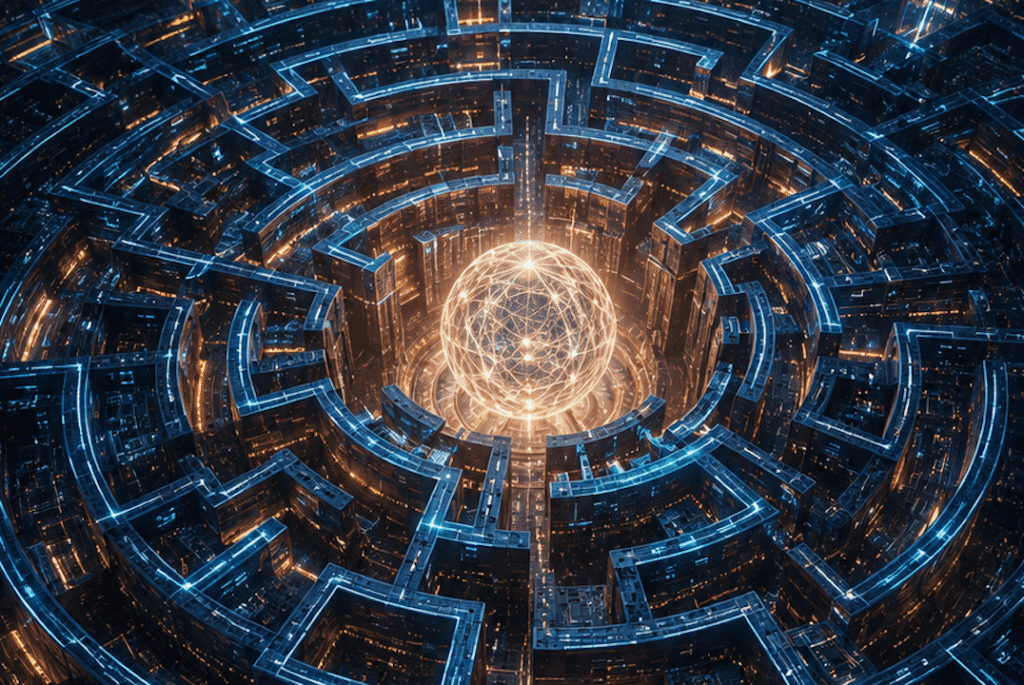
There was a time when philosophers helped shape civilization. Not academic debates hidden behind journal paywalls or tenure-track arguments confined to universities. Philosophers once sat at the center of society’s operating system. They questioned kings, challenged churches, redefined rights, and laid the intellectual foundations of modern democracy.
When we think of the Age of Enlightenment, names such as Kant, Hume, Voltaire, and Rousseau come to mind. Their ideas did not remain confined to classrooms. They escaped into the streets, into governments, into constitutions, and eventually into the architecture of modern society itself.
Today, it is difficult to imagine a philosopher commanding similar influence. The easy conclusion is that philosophy has declined and that modern thinkers are somehow lesser minds than their Enlightenment predecessors. But that may be the wrong diagnosis.
The real difference is not intelligence but complexity.
The Enlightenment emerged during an era when a single mind could plausibly engage with most of humanity’s accumulated knowledge. A philosopher could engage science, politics, economics, religion, and ethics without drowning in an ocean of information. That world no longer exists.
The modern knowledge economy has fragmented into thousands of specialized domains. Artificial intelligence researchers struggle to keep up with AI research. Cybersecurity experts cannot master every branch of cybersecurity. Even medicine has become a collection of increasingly specialized disciplines. Philosophy has followed the same path.
Today’s philosophers spend entire careers investigating highly specific questions. What is consciousness? Can artificial intelligence possess moral agency? What obligations do wealthy societies owe future generations? How should democratic institutions function in an age of algorithmic manipulation? These are important questions, yet they rarely command public attention the way Enlightenment debates once did.
Ironically, some of the most influential philosophers of our era may not even be recognized as philosophers. When AI researchers debate machine consciousness, they are wrestling with questions philosophers have explored for centuries. When governments attempt to regulate social media platforms, they confront issues involving power, truth, and public discourse. When societies argue about digital rights, privacy, and surveillance, they are engaging in moral philosophy whether they realize it or not.
The philosopher has not disappeared; the philosopher has simply become less visible.
This shift says something important about the technology age. We celebrate founders, engineers, venture capitalists, and influencers. We reward those who build systems, but we pay far less attention to those who ask whether those systems should exist in the first place.
Silicon Valley became exceptionally good at answering the question, “Can we?” It remains far less interested in answering, “Should we?” That gap may explain why so many of today’s technological crises feel philosophical at their core.
Artificial intelligence forces us to reconsider what intelligence actually means. Social media forces us to examine the nature of truth and community. Algorithmic governance raises questions about autonomy and free will. Climate technology confronts us with ethical obligations that extend beyond our own lifetimes. These are not engineering problems but philosophical problems wearing technological clothing.
This may explain why the modern world often feels intellectually disoriented. We possess unprecedented computational power but diminishing patience for reflection. We can process enormous volumes of information yet struggle to determine what wisdom looks like.
The technology industry often assumes that innovation naturally produces progress. History suggests otherwise. The same technologies that connect communities can also polarize them. The same algorithms that improve efficiency can amplify inequality. The same AI systems that promise productivity gains can concentrate power in the hands of a few companies and governments.
Technology can answer many questions, but it cannot determine which questions are worth asking. That task remains stubbornly human.
The Enlightenment did not produce great philosophers because people were smarter back then. It produced great philosophers because society believed ideas mattered enough to change the world. That belief feels less certain today.
Yet as artificial intelligence, automation, and digital networks reshape civilization, philosophy may be entering an unexpected renaissance. Not because philosophers will once again become celebrities, but because the questions they ask are becoming impossible to ignore.
The future may be built by engineers and algorithms. But as machine intelligence, automated governance, and platform economies continue to reshape society, the most important questions will remain stubbornly human. The next great philosophers may not emerge from universities or lecture halls. They may appear at the fault lines between technology and power, asking the questions that machines cannot answer. In an age increasingly defined by artificial intelligence, those questions may matter more than ever.
————————————————————————-
TEN YEARS OF TECHSABADO!
PLEASE LIKE our FACEBOOK PAGE and SUBSCRIBE to OUR YOUTUBE CHANNEL.
WATCH TECHSABADO ON OUR YOUTUBE CHANNEL:
WATCH OUR OTHER YOUTUBE CHANNELS:
PLEASE LIKE our FACEBOOK PAGE and SUBSCRIBE to OUR YOUTUBE CHANNEL.