THINK SINGAPORE 2026 | IBM expands AI, quantum initiatives across Asia
At the center of the initiative is an AI Assessor that analyzes voice communications, treatment decisions and simulation data to generate objective performance insights.
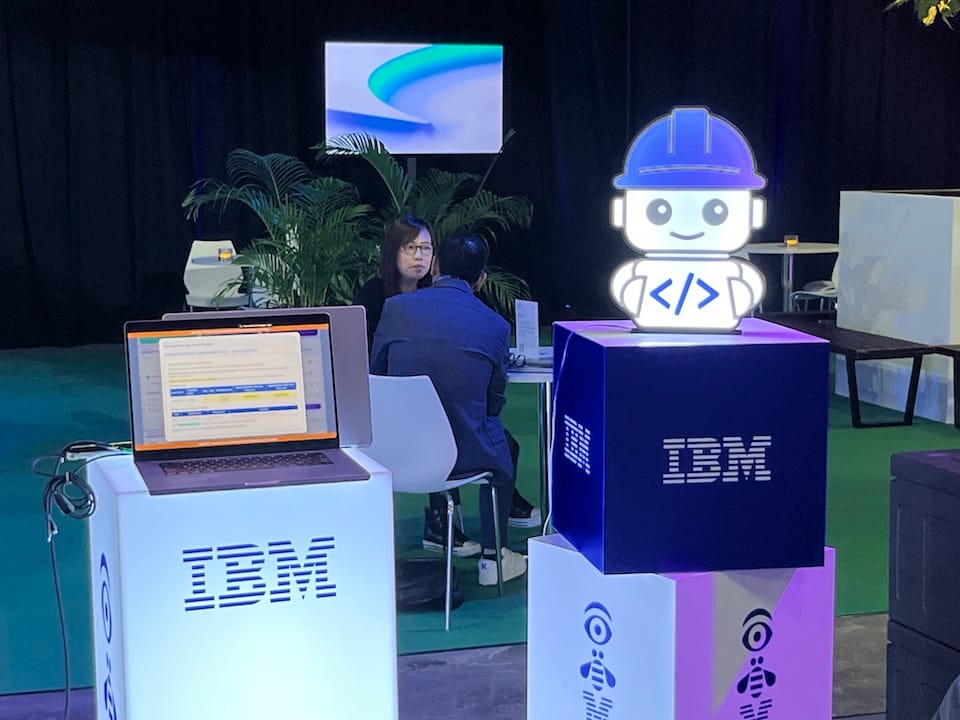
IBM expanded its artificial intelligence, quantum computing and public-sector technology initiatives across Asia through a series of partnerships announced this week, spanning healthcare, defense, energy and climate resilience projects in Singapore, Indonesia and Malaysia. The initiatives reflect growing efforts by governments and major organizations to deploy AI and explore quantum computing to improve decision-making, operational efficiency and long-term resilience.
Among the announcements is a collaboration between Singapore’s Changi General Hospital (CGH) and IBM to develop what the organizations described as the first AI-powered pediatric mass casualty incident (MCI) training platform. The project combines IBM watsonx.ai and watsonx Orchestrate with mixed reality technologies to help healthcare professionals prepare for emergencies involving multiple pediatric casualties.
The platform aims to address limitations of traditional emergency response training, which often relies on manikin drills and paper-based simulations. By integrating artificial intelligence with immersive simulation, the system provides real-time scenario intelligence, workflow orchestration and performance assessment during training exercises.
At the center of the initiative is an AI Assessor that analyzes voice communications, treatment decisions and simulation data to generate objective performance insights. The technology is intended to improve debriefing sessions, identify gaps in emergency response and provide measurable indicators of readiness among clinical teams.
“AI is transforming healthcare by turning data into actionable intelligence,” said Adjunct Assistant Professor Jimmy Goh, senior consultant in the Department of Emergency Medicine at Changi General Hospital. “Leveraging watsonx.ai for real-time scenario intelligence and watsonx Orchestrate for agentic workflow orchestration and performance tracking, Changi General Hospital is bringing together AI, mixed reality, and clinical expertise to deliver a next-generation training of Pediatric Mass Casualty Incident (MCI) preparedness that provides objective performance insights, enhances decision-making, and scales best practices across healthcare teams.”
Separately, Singapore’s Ministry of Defence announced that the Singapore Armed Forces’ Digital and Intelligence Service (DIS) and the Defence Science and Technology Agency (DSTA) have partnered with IBM to explore quantum computing for mission planning and logistics optimization.
The collaboration will evaluate whether quantum optimization techniques can improve planning processes involving complex operational constraints, resource allocation and timelines. Engineers from DIS and DSTA will work with IBM specialists to develop and assess quantum algorithms for representative mission-planning problems while building local expertise in the emerging technology.
“Quantum computing has the potential to transform how complex mission planning problems are solved, and we believe it is important to engage early to understand both its opportunities and limitations,” said Military Expert 7 Guo Jinghua, commander of the SAF C4 and Digitalisation Command.
DSTA Deputy Chief Executive (Information) Gayle Chan said evaluating operational applications alongside systems engineering expertise would help determine where quantum technologies could deliver meaningful impact in future mission planning. IBM’s Scott Crowder, vice president for IBM Quantum Adoption and Business Development, said the company would provide cloud access to IBM’s quantum computing resources and training to help the organizations build quantum computing capabilities.
IBM also announced progress in Indonesia through its IBM Impact Accelerator program. Working with the Kota Kita Foundation, the company is developing an AI-powered platform to help the city of Samarinda anticipate climate risks and strengthen urban resilience.
The project, known as SADAR, is designed to help local authorities shift from reactive disaster response to predictive risk management. The GIS-enabled platform combines climate, socioeconomic and historical data using watsonx, IBM Cloud and the Prithvi model to identify areas at higher risk from flooding, heat stress and other environmental hazards.
According to the project brief, the platform is intended to serve as a whole-of-government system rather than a tool for a single agency. It will initially be piloted with the regional disaster management agency before expanding to support urban planning, economic development and social policy across city departments. The initiative also aims to create a common framework for resilience planning while reducing duplication of data across government agencies.
In Malaysia, IBM Consulting announced a collaboration with PETRONAS Carigali Sdn. Bhd. and Tridiagonal.AI Pvt. Ltd. to expand AI adoption across upstream oil and gas operations. The companies will co-develop AI-powered solutions covering operations and asset management using IBM Enterprise Advantage as the orchestration layer, together with IBM Maximo and IBM Garage methodologies.
The initiative seeks to integrate AI agents, digital assistants and automation tools into day-to-day operations to improve maintenance planning, optimize resource allocation and enhance asset performance across PETRONAS Carigali’s business.
“We aren’t just adopting AI to improve workflows; we are embedding it to drive bottom-line performance, asset reliability, and speed-to-value aggressively,” said Hazli Sham Kassim, chief executive officer of PETRONAS Carigali. “By utilising AI as a tool, we are empowering our workforce to eliminate operational challenges and make better critical decisions faster.”
The initiatives illustrate IBM’s regional strategy of applying AI and emerging computing technologies to healthcare, defense, climate resilience and energy. While each project addresses different operational challenges, they share a common objective of using advanced technologies to improve decision-making and strengthen organizational capabilities across Asia.
Full disclosure: All news articles published on the TechSabado website are written by human journalists, unless otherwise specified. Final text editing is partially assisted by artificial intelligence (AI).
————————————————————————-
TEN YEARS OF TECHSABADO!
PLEASE LIKE our FACEBOOK PAGE and SUBSCRIBE to OUR YOUTUBE & SPOTIFY channels.
WATCH TECHSABADO ON OUR YOUTUBE CHANNEL:
WE ARE ALSO ON SPOTIFY

WATCH OUR OTHER YOUTUBE CHANNELS:
PLEASE LIKE our FACEBOOK PAGE and SUBSCRIBE to OUR YOUTUBE CHANNEL.