TELECOM | PLDT to block over 100 sites as telcos step up child online protection
The initiative builds on the PLDT Group’s existing child protection and online safety programs, including the blocking of sites hosting child sexual abuse material.
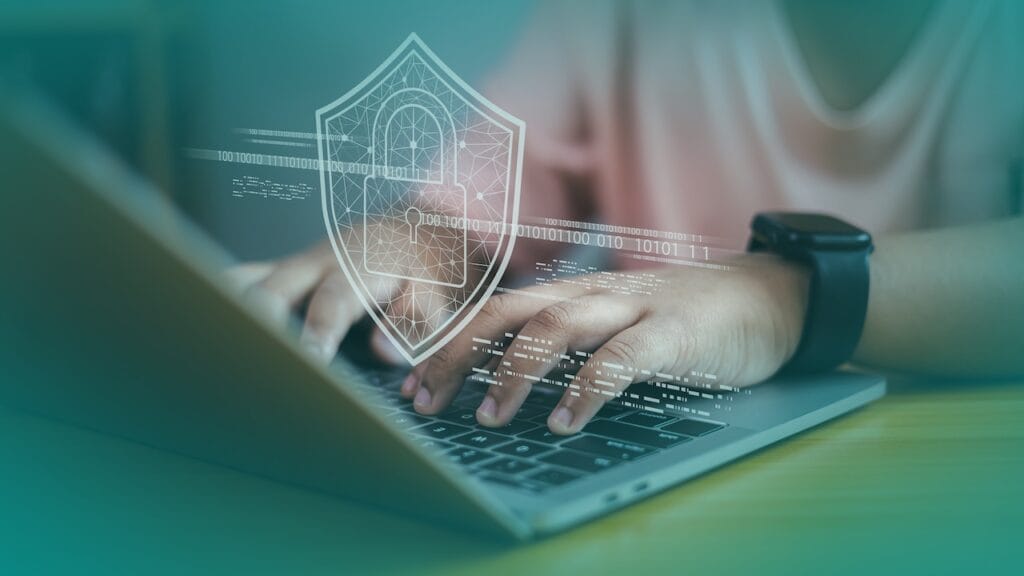
Child typing on laptop with smartwatch, overlay of shield and lock symbol representing cybersecurity, data protection, online privacy, internet safety, and digital technology for education and kids.
PLDT Inc. and its wireless unit Smart Communications Inc. will block more than 100 websites streaming or hosting footage of school shootings and other acts of extreme violence, as telecommunications companies in the Philippines step up efforts to protect children from harmful online content.
The sites were identified through PLDT’s monitoring efforts and will be blocked at the network level, making them inaccessible to PLDT and Smart subscribers. The company said the list will continue to expand as additional sites are identified through monitoring and coordination with government agencies, child protection organizations and parenting communities.
“This is something we do not tolerate,” said PLDT Chief Operating Officer Butch Jimenez. “We have decided to ban these kinds of sites preemptively, as soon as they are discovered. Our networks will not be used as a channel for content that glorifies violence and puts our communities, especially our children, at risk.”
Jimenez said PLDT and Smart would continue blocking sites as they are identified.
“There is no debate to be had here,” he said. “Content that turns real-world violence into entertainment has no place on our networks and in our society, and we will keep acting decisively every time we find it.”
The initiative builds on the PLDT Group’s existing child protection and online safety programs, including the blocking of sites hosting child sexual abuse material.
The PLDT move comes as Education Secretary Sonny Angara calls for greater cooperation between the government, telecommunications companies and social media platforms to strengthen safeguards for minors online.
Globe has supported Angara’s call, saying protecting children online requires coordinated action among government, industry, schools and families. The company said social media platforms have a role in strengthening content moderation, age-appropriate experiences and parental controls, while telecommunications companies can provide network-level protection, online safety education and tools for families.
“Secretary Angara’s call recognizes that protecting children online requires coordinated action across the digital ecosystem. Globe is ready to support DepEd and work with government, schools, parents, and technology platforms to help create a safer online environment for young Filipinos,” said Atty. Froilan Castelo, Globe general counsel.
Globe also cited UNICEF’s position that age restrictions alone are insufficient to keep children safe online. The company said broader measures should include safer platform design, effective content moderation, age-appropriate online experiences and support for parents and caregivers.
Converge ICT Solutions Inc. has reported similar network-level measures against harmful online material. In 2025, the company said it denied nearly 12 billion entry requests to websites containing dangerous, inappropriate or harmful content and blacklisted more than 72,000 domains and web addresses linked to prohibited content.
Converge CEO Dennis Anthony Uy said the company works with the Department of Information and Communications Technology, National Telecommunications Commission, Cybercrime Investigation and Coordinating Center and Philippine National Police, as well as international organizations such as the Internet Watch Foundation, to address illicit online activities, including content involving extreme violence.
Converge also maintains a Child Online Safeguarding Policy and said it follows due process when blocking harmful sites under its Human Rights Policy.
The actions by PLDT, Globe and Converge reflect a broader industry approach in which network-level blocking is being used alongside platform moderation, parental controls and digital literacy to address online risks to minors.
For PLDT and Smart, the immediate focus is on preventing subscribers from accessing sites that distribute footage of real-world violence. The company said its monitoring and blocking efforts will continue as additional sites are identified.
Full disclosure: All news articles published on the TechSabado website are written by human journalists, unless otherwise specified. Final text editing is also performed by human editors, with artificial intelligence (AI) used only to assist with additional grammar and style guide corrections..
————————————————————————-
TEN YEARS OF TECHSABADO!
PLEASE LIKE our FACEBOOK PAGE and SUBSCRIBE to OUR YOUTUBE & SPOTIFY channels.
WATCH TECHSABADO ON OUR YOUTUBE CHANNEL:
WE ARE ALSO ON SPOTIFY

WATCH OUR OTHER YOUTUBE CHANNELS:
PLEASE LIKE our FACEBOOK PAGE and SUBSCRIBE to OUR YOUTUBE CHANNEL.