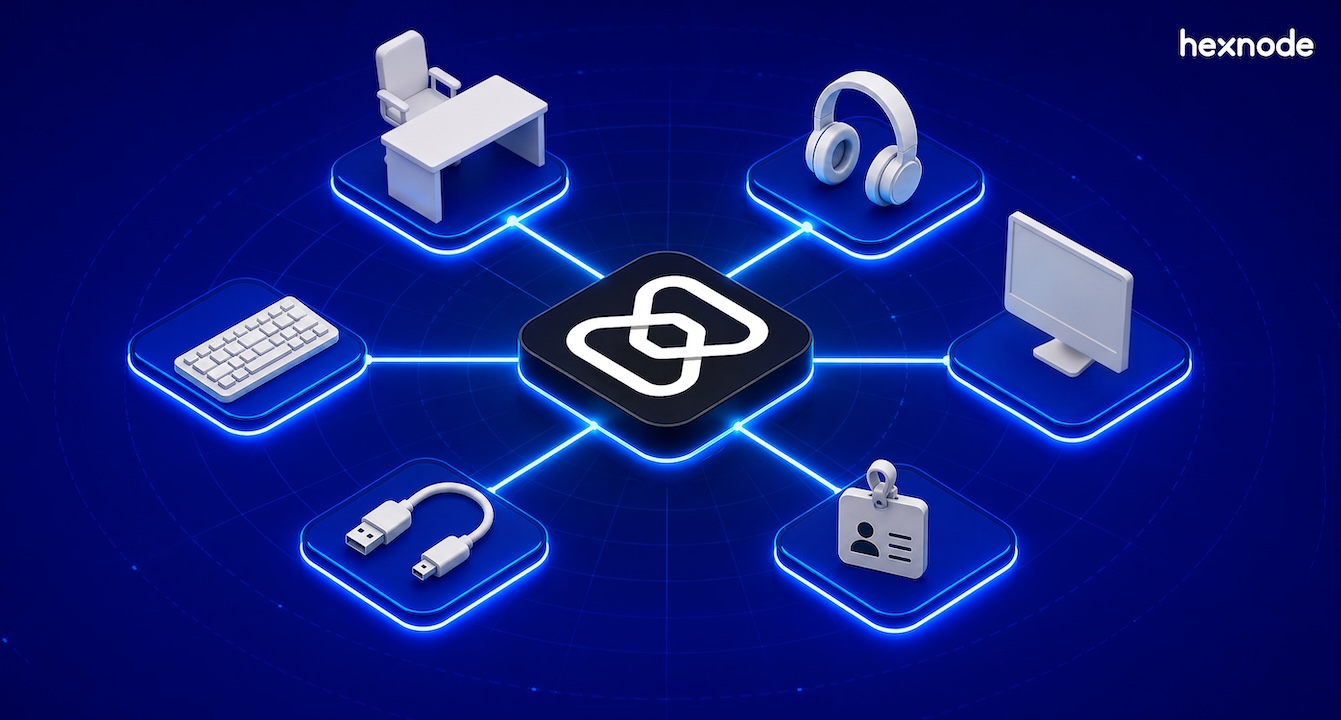
Hexnode has expanded its unified endpoint management (UEM) platform with native IT asset management capabilities, allowing organizations to track hardware, workplace equipment, assignments and asset lifecycles through a single console.
Announced Nov. 18, the new Hexnode Asset Management feature connects physical asset records with managed devices and employee information. It covers equipment inventory, maintenance, financial records and physical audits, extending management beyond devices enrolled in the UEM platform.
The system allows IT teams to track individual equipment such as laptops and monitors, while managing items such as cables and keyboards by quantity. It also supports workplace assets including furniture and access cards. Connected peripherals can be detected automatically for administrator review and registration.
Assets can be assigned to employees or grouped into equipment bundles. Checkout records and return deadlines help administrators monitor loaned equipment, while integration with employee directories identifies assets that must be recovered when staff leave an organization.
The platform also records purchase, vendor, warranty and contract information. Automatic depreciation and book-value calculations are designed to help IT teams plan maintenance, replacement and retirement. Administrators can schedule maintenance, document disposal and generate disposal certificates.
For physical inventory checks, the system supports QR-based audits, telemetry pre-scans and guided workflows to identify discrepancies in asset assignments or locations. It includes more than 16 reports and an Asset-Only Technician role that allows inventory personnel to access asset records without broader UEM policy permissions.
“IT teams are accountable for far more than the devices they enroll,” said Sahad M, chief technology officer at Hexnode.
“A device can be correctly configured while the organization’s record of who holds it, what accompanies it and when it should be recovered remains incomplete. Bringing asset records into UEM gives teams a more complete basis for managing that responsibility,” he said.
Alongside the asset management expansion, Hexnode UEM is adding dedicated Shared Device Policies for Android devices and remote BIOS management for supported Windows PCs.
The Android policies allow administrators to manage devices used by frontline and shift-based employees through individual sign-ins and automatic logout. Selected applications can remain accessible without authentication, while access to other apps requires users to sign in.
For supported Windows PCs, remote BIOS management covers boot-order configuration and firmware password controls. Administrators can prepare devices for network imaging, update passwords after employee changes and clear credentials before resale.
Hexnode said the remote management features are intended to reduce desk-side visits and reliance on vendor-specific scripts while helping protect BIOS settings and startup access.
Hexnode Asset Management is available to customers subscribed to the UEM Enterprise plan or higher.
Full disclosure: All news articles published on the TechSabado website are written by human journalists, unless otherwise specified. Final text editing is also performed by human editors, with artificial intelligence (AI) used only to assist with additional grammar and style guide corrections..
————————————————————————-
TEN YEARS OF TECHSABADO!
PLEASE LIKE our FACEBOOK PAGE and SUBSCRIBE to OUR YOUTUBE & SPOTIFY channels.
WATCH TECHSABADO ON OUR YOUTUBE CHANNEL:
WE ARE ALSO ON SPOTIFY

WATCH OUR OTHER YOUTUBE CHANNELS:
PLEASE LIKE our FACEBOOK PAGE and SUBSCRIBE to OUR YOUTUBE CHANNEL.





Leave a Reply