TECH NEWS | US clears Nvidia H200 AI chip exports to China
The approval allows US chipmakers, including Nvidia, AMD and Intel, to sell certain advanced processors to China while continuing the ban on Nvidia’s more powerful Blackwell and Rubin chips.
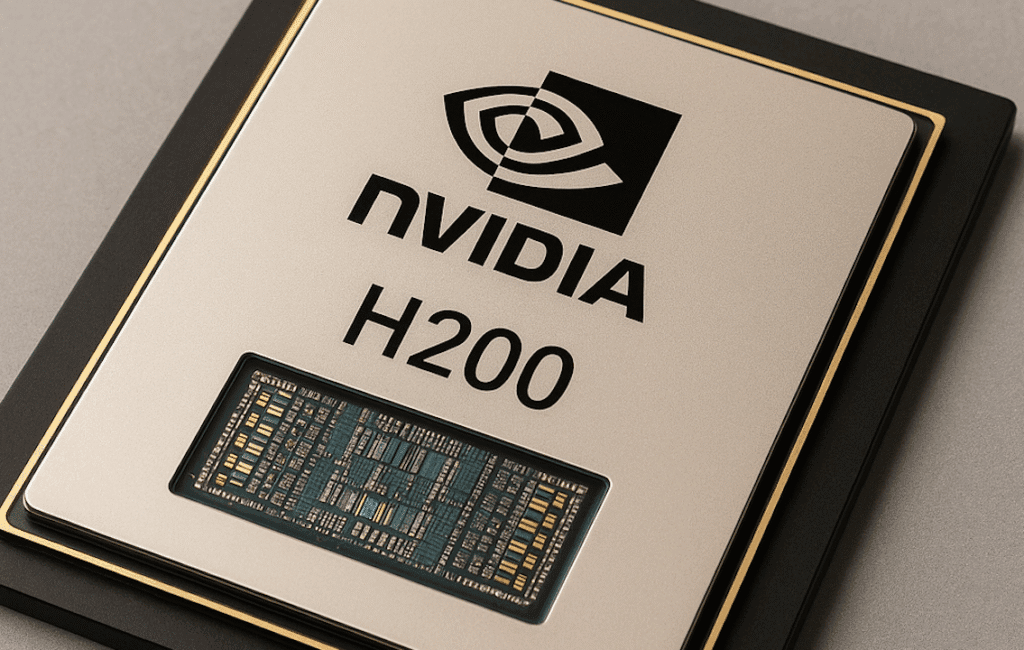
AI-generated graphics
The U.S. government has approved Nvidia’s request to export its H200 artificial intelligence chips to select customers in China with a 25 percent levy, reversing earlier restrictions. The announcement was made by President Donald Trump on Truth Social, where he said the move would proceed under conditions that maintain “continued strong national security.” He also said Chinese President Xi Jinping responded positively to the decision.
The approval allows US chipmakers, including Nvidia, AMD and Intel, to sell certain advanced processors to China while continuing the ban on Nvidia’s more powerful Blackwell and Rubin chips. The US Department of Commerce will conduct security checks to ensure compliance. The policy shift could keep Chinese companies reliant on US technology standards even as Beijing encourages local alternatives such as Huawei-developed AI chips.
For Nvidia, the change creates new revenue opportunities after the company excluded China sales of the H20 from earlier financial projections because of tightened export rules. The H200 chip offers significantly higher memory bandwidth than the H20, enabling faster AI data processing, though it is still below the performance level of Nvidia’s flagship Blackwell systems. Nvidia previously modified the H200 following US export restrictions imposed in 2023 under then-President Joe Biden.
In China, regulators reportedly ordered domestic technology firms in September to stop purchasing Nvidia AI chips to support local suppliers. Reuters reported that the latest US approval follows a recent truce in the US-China trade and technology dispute brokered by Trump and Xi. The decision has drawn criticism from US Senator Elizabeth Warren, who argued it could strengthen China’s technological and military capability at the expense of US national security. “This risks turbocharging China’s bid for technological and military dominance and undermining US economic and national security,” Warren said, according to Reuters.
The shift also carries global financial implications. According to deVere Group CEO Nigel Green, allowing H200 exports represents a meaningful change in the AI investment environment. “The move changes how capital markets should think about future AI leadership, competitive dynamics, and long-term value creation across sectors,” Green said. He added that expanded access to H200-level computing accelerates AI development timelines and lowers iteration costs, enabling more direct competition with top global platforms.
China has demonstrated the ability to build capable AI systems using lower-performance chips, as seen with the development of models such as DeepSeek. Green said that when restrictions are lifted, “convergence happens faster,” reducing exclusive advantages held by companies with higher-end hardware. He noted that broader availability of advanced chips increases the number of serious AI competitors across industries, including autonomous vehicles, advanced manufacturing, logistics optimization, healthcare analytics and defense-linked technologies.
Green said investors should prepare for a market in which AI leadership becomes more contested. Wider diffusion of computing capability compresses competitive gaps and pushes markets to reward execution rather than exclusivity. Over time, he said the trend influences how investors assess valuations and manage concentration risk, especially in sectors that have heavily relied on long-term dominance by a handful of companies.
————————————————————————-
WATCH TECHSABADO ON OUR YOUTUBE CHANNEL:
WATCH OUR OTHER YOUTUBE CHANNELS:
PLEASE LIKE our FACEBOOK PAGE and SUBSCRIBE to OUR YOUTUBE CHANNEL.
PLEASE LIKE our FACEBOOK PAGE and SUBSCRIBE to OUR YOUTUBE CHANNEL.