OP-ED | Philippines weighs stronger safeguards as social media risks for youth mount
The push for faster blocking has also revived a longstanding concern among civil society and internet-rights advocates: what legal safeguards should apply when the government restricts access to websites or online platforms?
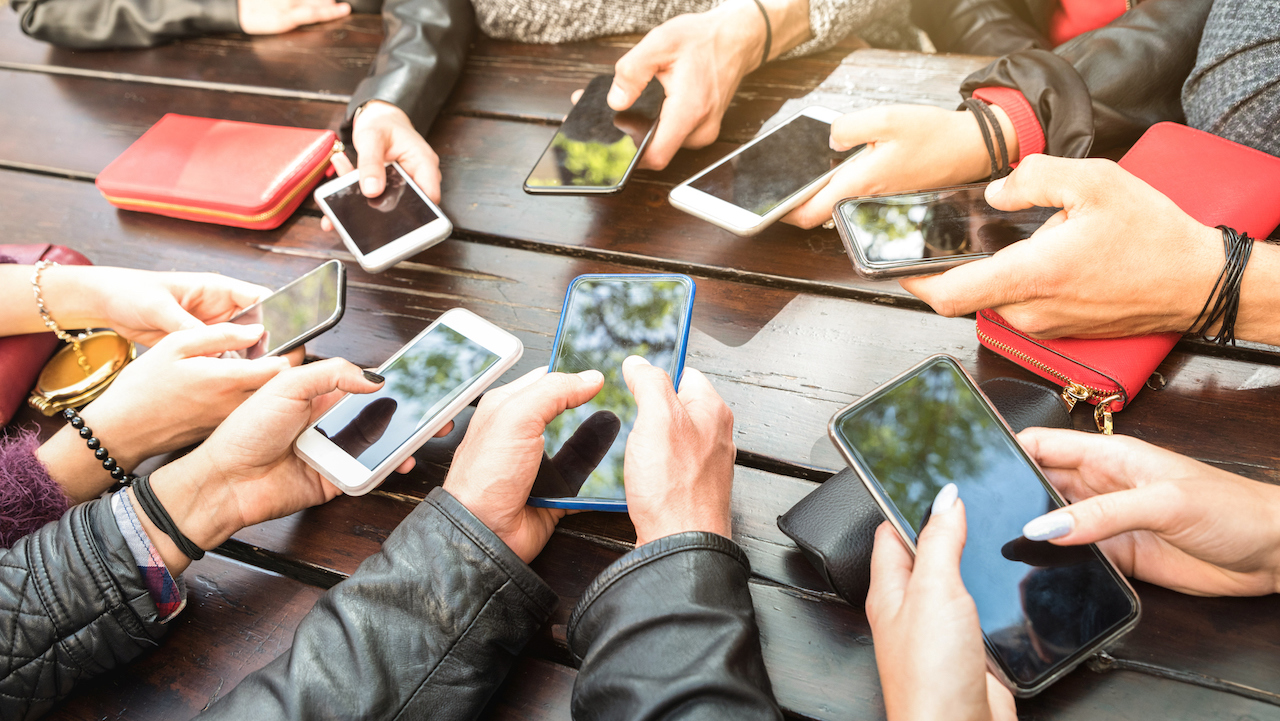
Teenager people having fun using smartphones - Millenial community sharing content on social media network with mobile smart phones - Technology concept with millennial playing with cellphone devices (Teenager people having fun using smartphones - Mil
The Philippine government concern over minors’ exposure to social media and internet content has intensified following two school shootings, including a fatal attack in Zamboanga City that was livestreamed and prompted renewed calls for tighter controls on violent online material.
The Aug. 18 shooting at Ateneo de Zamboanga University Junior High School, which killed two students including the suspected shooter, followed a June shooting at San Jose National High School in Tacloban City that killed three students and injured 20 others.
The Zamboanga attack particularly sharpened the debate over online platforms and youth safety after footage of the shooting was livestreamed and circulated online. The incident prompted government agencies and lawmakers to consider stronger measures covering social media, online gaming and other digital platforms.
The Department of Information and Communications Technology has been coordinating with the National Telecommunications Commission, Cybercrime Investigation and Coordinating Center, Philippine National Police, internet service providers, telecommunications companies and digital platforms on threat monitoring, information-sharing and network-level safeguards.
The response has expanded from removing footage of individual incidents to addressing the wider availability of violent and harmful material online.
But the push for faster blocking has also revived a longstanding concern among civil society and internet-rights advocates: what legal safeguards should apply when the government restricts access to websites or online platforms?
School shootings bring online exposure into focus
The Zamboanga shooting has raised questions about what young people encounter online and whether repeated exposure to graphic or violent material can contribute to harmful behavior.
During a Senate hearing, Department of Education Undersecretary Malcolm Garma warned that efforts to prevent school violence should not focus solely on social media. He said violent content from foreign incidents, YouTube and conventional television programs could contribute to copycat behavior among vulnerable young people.
DILG Secretary Jonvic Remulla also said initial findings in the Zamboanga investigation indicated that the Grade 8 student acted alone and had been influenced by an online game.
That statement concerns the circumstances of the specific case and does not establish a general causal relationship between online gaming or social media and school violence.
The distinction is important because evidence on the relationship between digital media and youth behavior remains complex.
The U.S. Surgeon General’s 2023 Advisory on Social Media and Youth Mental Health found that social media can provide community, friendship, self-expression and access to information, while also presenting potential risks involving harmful content, cyberbullying, social comparison, excessive use and disrupted sleep.
The advisory cited a longitudinal study of 6,595 U.S. adolescents ages 12 to 15 that found those who spent more than three hours a day on social media faced twice the risk of experiencing poor mental health outcomes, including symptoms of depression and anxiety. It also noted that adolescence is a sensitive period of brain development during which social pressure and peer comparison can have heightened effects.
At the same time, the advisory cautioned that more research is needed to determine exactly how social media affects young people and which groups are most vulnerable.
A separate 2025 study published in Nature Human Behaviour likewise found differences in social media experiences among adolescents with and without mental health conditions, but stressed the need for longitudinal and experimental research to clarify the direction and causality of these relationships.
PH debate moves toward platform accountability
The Philippine policy debate has consequently moved beyond parental supervision to the responsibilities of platforms and network operators.
The government and Meta, the US-based company behind social media platforms Facebook, Threads and Instagram, agreed to establish a technical working group to improve coordination, response times and action against harmful content and online threats. Meta also committed to continued cooperation with Philippine law enforcement in cases involving imminent harm to children.
The Palace has said it is open to proposals to restrict or ban social media and gaming platforms if studies determine that they pose serious risks to public safety or fail to address misinformation and other online harms. The position followed calls from the CICC to consider stronger action after the Zamboanga shooting.
Lawmakers have also considered restrictions on minors’ access to social media.
The National Center for Mental Health, however, has argued for safer and supervised social media use rather than an outright ban, according to Globe. NCMH psychiatrist Dr. Noel Reyes said social media can provide educational, communication and social benefits when used productively and under appropriate supervision.
Globe said the NCMH position supports a broader approach combining platform safeguards, responsible parenting, regulation and digital literacy rather than relying on a single intervention.
This reflects the broader scientific position that social media cannot simply be categorized as either beneficial or harmful.
Telcos step up network blocking
The school shootings have also accelerated industry action against violent content.
PLDT Inc. and Smart Communications Inc. said they would block more than 100 websites found to be streaming or hosting footage of school shootings and other acts of extreme violence.
The companies said the sites would be blocked at the network level, making them inaccessible to PLDT and Smart subscribers. The list would also expand as additional sites are identified through monitoring and coordination with government agencies, child protection organizations and parenting groups.
Globe said it was blocking additional sites carrying illegal gore-related content or material involving extreme violence, alongside measures ordered by Philippine government agencies.
In 2025, Globe said it blocked 438,446 domains and URLs containing child sexual abuse and exploitation material and invested more than $2.7 million in content-filtering and blocking systems.
Converge ICT Solutions Inc. reported that it denied nearly 12 billion entry requests to websites hosting dangerous, inappropriate or harmful content in 2025 and blacklisted more than 72,000 domains and web addresses linked to prohibited content.
Converge said it works with DICT, NTC, CICC, PNP and international organizations including the Internet Watch Foundation. It also said its blocking procedures include due process under its Human Rights Policy.
The measures represent a shift toward preventing access to harmful material at the network level instead of relying exclusively on children, parents or individual users to identify and report it.
But the expansion of network-level blocking raises a separate question: who decides what should be blocked, under what authority and with what avenue for review?
Rights groups warn against arbitrary blocking
The Philippines has already faced a major legal challenge over government-ordered website blocking.
In 2022, the NTC directed internet service providers to block 27 websites after then-National Security Adviser Hermogenes Esperon Jr. alleged that they were affiliated with or supporting terrorist organizations. The sites included alternative news organizations Bulatlat and Pinoy Weekly.
Civil society and media groups challenged the order, arguing that the NTC lacked authority to impose the blocking without judicial intervention.
The case became an important reference point in the current debate because it raised questions over administrative censorship, freedom of expression and due process.
The Supreme Court’s 2014 Disini v. Secretary of Justice ruling had already struck down Section 19 of the Cybercrime Prevention Act of 2012, which authorized the Department of Justice to order the blocking of computer data that it found prima facie to violate the law.
The Supreme Court held that the provision was unconstitutional because it allowed administrative blocking without judicial intervention and violated constitutional protections involving freedom of expression and unreasonable searches and seizures.
The legal history means the government cannot simply assume that an administrative directive automatically provides sufficient authority to block online material.
The relevant question is whether the agency has clear statutory authority, whether the material falls within a legally defined category and whether the restriction follows applicable procedural and constitutional safeguards.
That distinction is particularly important when authorities move from clearly illegal material to broader categories such as “extreme violence,” “harmful content” or material considered potentially influential to minors.
Not every block has the same legal basis
The legal issue is therefore more nuanced than saying that all website blocking requires a court order.
Philippine law expressly provides blocking and takedown mechanisms for certain categories of illegal material.
Republic Act 11930, the Anti-Online Sexual Abuse or Exploitation of Children and Anti-Child Sexual Abuse or Exploitation Materials Act, establishes obligations concerning online sexual abuse and exploitation of children and related material.
This differs from a government agency unilaterally ordering the restriction of an otherwise lawful website because officials consider its content harmful, dangerous or potentially influential.
The distinction is also relevant to the recent industry measures.
PLDT and Smart described their action as network-level blocking of sites that stream or host extreme-violence material. Globe said it was blocking additional sites in support of industry action and government orders. Converge said its own blocking procedures include due process under its Human Rights Policy.
These company-level actions should therefore not automatically be equated with a government censorship order.
At the same time, civil society and internet-rights advocates have reason to scrutinize government directives that compel private network operators to restrict access, particularly when the legal basis and review mechanisms are unclear.
The concern is not necessarily whether violent or exploitative material should be removed. It is whether the state can impose restrictions without clearly defined authority, procedural safeguards and an avenue for affected parties to challenge the decision.
Evidence points to a broader problem
The concern is not limited to violent videos.
The U.S. Surgeon General’s advisory identified several categories of potential harm, including exposure to suicide and self-harm content, body-image concerns, eating disorders, hate-based content, cyberbullying, online exploitation and excessive or problematic use. It also warned that platform features such as infinite scrolling, autoplay, notifications, recommendation algorithms and visible engagement metrics can encourage prolonged use.
The advisory stressed that children and adolescents do not respond to social media in the same way. Individual vulnerabilities, developmental stages and social and economic circumstances can influence whether online experiences are beneficial or harmful.
That finding is relevant to the Philippine debate because a blanket assumption that every young social media user faces the same level of risk could lead to policies that overlook differences among children.
Philippine evidence nevertheless points to significant exposure to online risks.
A UNICEF Philippines U-Report poll in 2025 found that 85.56% of more than 1,200 children and young people surveyed had encountered online content or behavior that made them feel unsafe, while 57.26% said such experiences occurred multiple times.
Only 2.99% said they reported incidents to authorities or hotlines, while 19.37% said they kept their experiences to themselves. Awareness of the MAKABATA Helpline 1383 was also low.
These figures indicate that improving reporting mechanisms and making children aware of available assistance may be as important as restricting access to particular types of content.
Beyond bans
The Philippine response is developing along several tracks: stronger platform cooperation, removal and blocking of harmful content, possible restrictions on minors’ access to social media, improved parental controls, digital literacy and greater attention to the circumstances that can put young people at risk.
The U.S. Surgeon General’s advisory recommends a similar shared-responsibility model. It calls for age-appropriate safety standards, stronger privacy protections for children, restrictions on harmful content, limits on engagement-maximizing features, independent assessments and greater transparency from technology companies.
It also stresses that the burden of protecting children should not fall entirely on parents and young people.
Industry programs in the Philippines reflect some of these recommendations.
PLDT and Smart, for example, have also worked with schools, civil society organizations and communities on digital literacy and child protection. Their Project SCROL initiative provides students, parents and educators with information on responsible social media use, identifying online risks and protecting themselves from digital threats.
For the Philippines, the recent school shootings have made the issue more immediate. The livestreaming and subsequent circulation of the Zamboanga attack demonstrated how quickly a violent incident involving students can become online material accessible beyond the original scene.
But the shootings also underscore the need to distinguish between exposure, correlation and causation. Government agencies are investigating multiple factors surrounding the attacks, including firearms access, school safety, bullying, online activity and the circumstances of the individuals involved.
At the same time, efforts to protect minors online must be balanced against constitutional protections for free expression and access to information.
The policy challenge is consequently broader than deciding whether minors should be allowed on social media.
It involves determining how platforms should be designed for young users, what content should be blocked before it reaches them, how quickly harmful material should be removed, how parents and schools can identify warning signs, and how children can obtain help when online experiences become threatening or harmful.
It also requires clear rules governing when the state itself can order an internet service provider to restrict access — and ensuring that those powers are exercised within the limits of the law.
The recent school shootings have moved those questions from an abstract debate about internet safety into a more urgent Philippine public-safety issue. But the country’s experience with website blocking shows that protecting children and protecting constitutional rights need not be competing objectives. Both require clear legal authority, due process, proportionality and accountable enforcement.
Full disclosure: All news articles published on the TechSabado website are written by human journalists, unless otherwise specified. Final text editing is also performed by human editors, with artificial intelligence (AI) used only to assist with additional grammar and style guide corrections..
————————————————————————-
TEN YEARS OF TECHSABADO!
PLEASE LIKE our FACEBOOK PAGE and SUBSCRIBE to OUR YOUTUBE & SPOTIFY channels.
WATCH TECHSABADO ON OUR YOUTUBE CHANNEL:
WE ARE ALSO ON SPOTIFY
WATCH OUR OTHER YOUTUBE CHANNELS:
PLEASE LIKE our FACEBOOK PAGE and SUBSCRIBE to OUR YOUTUBE CHANNEL.