SPECIAL REPORT | Southeast Asia gaming hits scale as mobile, creators reshape industry
With more than 670 million people and an estimated 290 million gamers in 2025, Southeast Asia now rivals major markets in scale while continuing to grow faster than North America and Europe.
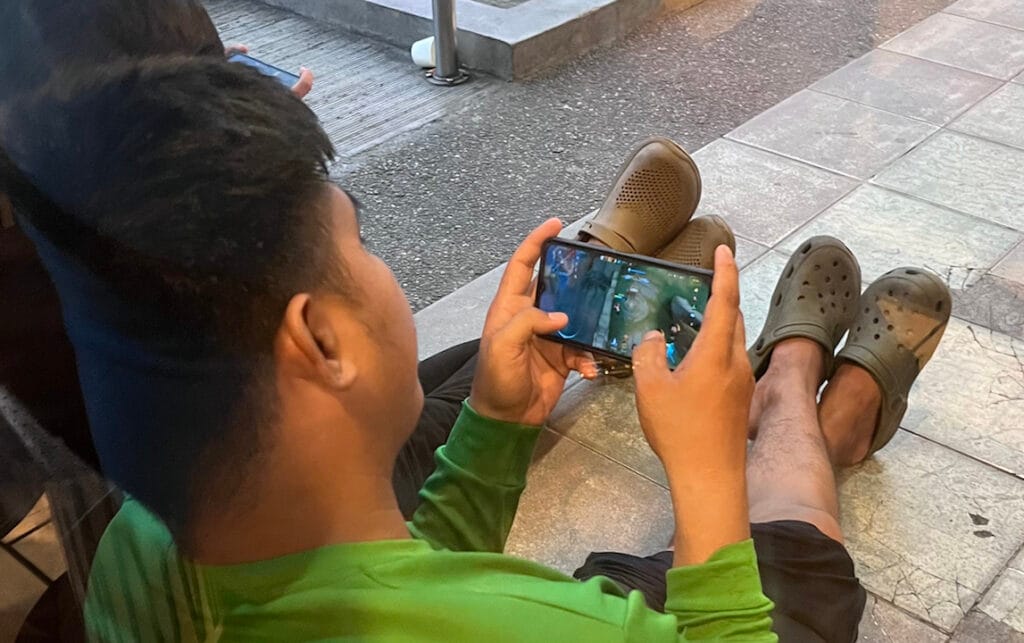
TechSabado file photo
Southeast Asia’s gaming industry is entering a new phase of growth, driven by mobile adoption, creator ecosystems and a young, digitally native population, positioning the region as a major global gaming hub, according to an industry report by Ampverse.
With more than 670 million people and an estimated 290 million gamers in 2025, Southeast Asia now rivals major markets in scale while continuing to grow faster than North America and Europe. Gaming revenue reached about $6.6 billion in 2025 and is projected to expand steadily through the decade, potentially exceeding $14 billion when broader ecosystem revenues such as advertising, esports and creator-driven content are included, based on data from Ampverse and industry trackers including Newzoo and Sensor Tower.
Mobile dominates, but ecosystem is evolving
Mobile gaming accounts for roughly 70% of total gaming revenue in Southeast Asia, reflecting widespread smartphone penetration and the dominance of free-to-play models, Ampverse said in its regional playbook report.
This mobile-first dynamic is reinforced by affordability and accessibility. In markets like the Philippines, Indonesia and Vietnam, smartphones remain the most practical gaming device, enabling mass adoption across urban and semi-urban populations.
By contrast, PC gaming continues to contribute a smaller but stable share, while console gaming remains limited to higher-income segments in major cities.
However, the industry is no longer defined solely by game sales or in-app purchases. Revenue streams are expanding into livestreaming, esports, brand integrations and digital communities, reshaping how value is created across the ecosystem, according to Ampverse.
Growth driven by engagement, not just spending
Unlike mature Western markets that rely heavily on high average revenue per user, Southeast Asia’s growth is fueled by scale and engagement.
The region consistently ranks among the top globally for mobile game downloads, with billions of installs recorded annually, based on data from Sensor Tower and other mobile analytics firms cited in the report.
High daily engagement, long session times and strong social interaction underpin this growth.
Industry data from Newzoo indicate that Southeast Asia contributes a significant share of global mobile game downloads, even as monetization per user remains lower than in developed markets.
This gap is gradually narrowing as payment infrastructure improves, digital wallets expand and publishers refine monetization strategies tailored to local behaviors.
Creators redefine discovery and marketing
A defining feature of Southeast Asia’s gaming market is the central role of content creators.
More than half of gamers in the region regularly consume gaming content on platforms such as YouTube, TikTok and Facebook Gaming, according to Ampverse.
Discovery is increasingly driven by creators rather than app store rankings or traditional advertising, reflecting a shift highlighted across multiple industry reports.
This change has altered the marketing playbook. Creator-led campaigns, livestreams and community-driven events often outperform static ads in driving installs and retention, the report noted.
In markets like the Philippines and Indonesia, gaming content spreads through social networks and peer influence, creating viral loops that traditional marketing channels struggle to replicate.
Creators are not just influencers but gatekeepers of trust, shaping how games are perceived and adopted.
Communities power retention and long-term value
Beyond discovery, communities play a critical role in sustaining engagement.
Gaming communities across Southeast Asia are built around Discord servers, Facebook Groups, in-game guilds and local tournaments, Ampverse said.
These networks drive retention, advocacy and cultural relevance.
Participation — not just exposure — has become the key metric. Players are more likely to remain engaged with games that offer social interaction, competitive events and ongoing community support.
This has pushed publishers and brands to rethink their approach, shifting from one-off campaigns to long-term community building.
Country dynamics highlight diverse market behavior
While Southeast Asia is often treated as a single market, conditions vary widely across countries.
Indonesia remains the largest market by user base, with more than 150 million gamers, driven by scale and strong creator influence, according to Ampverse.
The Philippines, with around 45 million gamers, stands out for its highly social gaming culture and strong engagement in livestreaming and community-driven content.
Thailand is among the region’s most monetized markets, supported by a mature esports scene and higher acceptance of premium content.
Vietnam is seeing rapid growth in both players and local game development, while Malaysia and Singapore serve as regional hubs for testing, operations and high-value users, the report added.
Singapore, despite its smaller population, has one of the highest average revenue per user levels in the region, making it strategically important for publishers.
Challenges persist despite growth
Despite strong momentum, Southeast Asia presents structural challenges.
Cultural and linguistic diversity across markets complicates localization efforts, while consumer behavior varies significantly between countries, requiring tailored strategies rather than a single regional approach.
Measurement also remains a challenge, particularly in tracking the full impact of creator-led campaigns and community engagement, according to Ampverse.
In addition, audiences in the region show low tolerance for inauthentic or overly commercial campaigns, making it difficult for brands to replicate Western marketing strategies.
Brands and publishers adapt strategies
To succeed, companies are increasingly adopting localized, community-first strategies.
For brands, this means integrating into gaming culture rather than interrupting it — using creators, in-game experiences and interactive formats to engage users.
For publishers, success depends on early investment in communities, ongoing engagement beyond launch windows and using creators to onboard and educate players.
Localization is also evolving beyond language, requiring cultural alignment with local norms, humor and social behavior.
Gaming as culture, not just content
The long-term outlook for Southeast Asia’s gaming sector remains strong.
A young population, rising internet penetration and continued smartphone adoption are expected to sustain growth, supported by regional and global industry data.
Gaming is increasingly seen not just as entertainment but as a broader cultural and commercial platform shaping media consumption, social interaction and brand engagement.
As the ecosystem matures, the companies that succeed will be those that understand the region’s dynamics: scale over average revenue per user, community over campaigns and participation over passive consumption.
————————————————————————-
WE ARE 10 YEARS OLD! TEN YEARS OF TECHSABADO, IMAGINE THAT.
WATCH TECHSABADO ON OUR YOUTUBE CHANNEL:
WATCH OUR OTHER YOUTUBE CHANNELS:
PLEASE LIKE our FACEBOOK PAGE and SUBSCRIBE to OUR YOUTUBE CHANNEL.
PLEASE LIKE our FACEBOOK PAGE and SUBSCRIBE to OUR YOUTUBE CHANNEL.