SIGNAL SINGAPORE 2026 | AI ‘amnesia’ tests Filipino trust in customer service
Twilio’s 2026 Customer Insights Series found that AI agents now handle 46% of customer-service conversations in the Philippines,
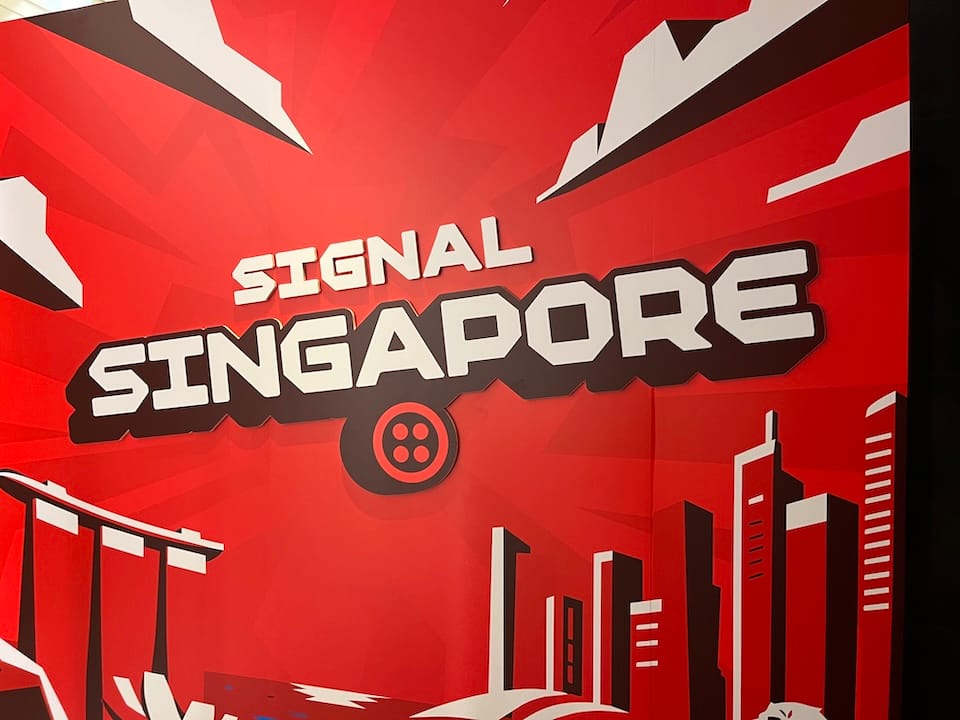
SINGAPORE: Filipino consumers are increasingly comfortable letting artificial intelligence handle routine customer-service tasks, but they expect AI systems to remember who they are and what they have already said.
That expectation is exposing a gap between what companies believe their AI systems can do and what customers actually experience.
Twilio’s 2026 Customer Insights Series found that AI agents now handle 46% of customer-service conversations in the Philippines, with business leaders expecting the share to reach 61% by 2027. At the same time, 73% of Filipino consumers said they still have to repeat information during automated interactions. Twilio describes the problem as “AI amnesia” — when an AI system loses previous context or interaction history.
The findings were discussed with Thomas Wyatt, chief operating officer of Twilio, during an interview on the sidelines of Signal Singapore 2026 on Sept. 17.
One of the report’s more striking findings is the discrepancy between business and consumer perceptions. While 74% of Philippine organizations surveyed said their AI agents recognize returning customers and can access their history, 73% of consumers said they still have to repeat information during automated interactions.
Wyatt said the difference reflects a fundamental problem in the way enterprises are deploying AI.
“AI, the way we define it, is largely general intelligence. It’s horizontal understanding,” Wyatt said. Large language models have access to broad knowledge, he said, but do not necessarily have detailed knowledge about an individual customer.
“The difference is you have to connect the memory of the brand’s understanding of the consumer with the general-purpose knowledge of an AI assistant or an AI large language model,” he said.
In other words, having an AI model that can understand language is not the same as having an AI system that understands the customer’s history with a particular company.
“If a customer is thinking that the AI is going to give them a personalized response, unless you’ve connected it to your data warehouse or your customer memory layer, it’s very difficult to personalize the response,” Wyatt said.
This is particularly important in voice-based customer service, where customers expect responses without the pauses associated with retrieving information from separate systems.
Wyatt said Twilio’s approach is to provide a customer-memory layer that can retrieve relevant information during an interaction and write new information back to a company’s system of record afterward.
The company introduced Conversation Memory earlier this year as a way of maintaining customer history, preferences and other context across interactions and channels. Twilio says the system can resolve customer identity across channels and retrieve relevant information during an active conversation.
Memory is different from hallucination
The problem of AI amnesia should not be confused with hallucination, Wyatt said.
AI amnesia involves an AI system failing to retain or retrieve relevant information from previous interactions. Hallucination occurs when an AI generates information that is false or unsupported.
“AI is largely probabilistic,” Wyatt said. “It’s predicting what and guessing what the answer is, and what the best the recommended best response is. It doesn’t know for sure.”
That makes the design of AI systems important, particularly when they are being used for specific customer-service functions rather than general conversation.
“Hallucinations, you got to really fine-tune your AI for the model for the use case that it’s designed for versus general-purpose,” he said. “The more you fine-tune it, the more accurate it becomes.”
The distinction becomes increasingly relevant as companies move from AI answering questions to AI performing transactions.
Twilio’s research found that Filipino consumers are generally comfortable allowing AI to handle routine tasks. Eighty-nine percent said they would allow AI to schedule an appointment, while 87% were comfortable with AI making dinner reservations or processing returns, and 85% with selecting concert seats.
But willingness drops when the consequences become more significant. The figures fall to 61% for processing payments, 58% for initiating loan applications and 54% for handling medical inquiries.
Wyatt said this caution is part of the gradual process by which consumers develop their own boundaries around AI.
“I think everyone’s on their own journey around that,” he said.
Consumers want disclosure
Another issue identified by the study is transparency.
Seventy-three percent of Filipino consumers said brands should disclose upfront when they are interacting with AI. Only 26% of Philippine organizations reported disclosing the AI identity at the beginning of every interaction.
Wyatt cited Philippine Airlines as an example of an approach that gives customers a choice between interacting with AI and waiting for a human agent.
He said the appropriate choice can depend on the nature of the transaction.
A customer making a relatively simple change to a booking may be comfortable allowing an AI agent to handle it. But a customer arranging assistance for an elderly passenger, for example, may prefer speaking with a human to make sure the request is properly handled.
The study found that the ability to switch seamlessly to a human representative was the most important factor contributing to consumer comfort, cited by 29% of respondents. Another 26% preferred human oversight for major decisions.
Businesses are already responding to that expectation. Eighty percent of Philippine organizations surveyed said they had implemented or piloted human-in-the-loop systems, while 51% said human monitoring or intervention in live AI interactions was already standard practice.
The human agent becomes the high-touch option
Wyatt does not expect AI to eliminate human customer-service representatives.
Instead, he expects the role of humans to change as AI becomes more capable of handling routine interactions.
“There’s certain types of interactions … that are just better served with humans,” he said.
The distinction, he suggested, could increasingly be based on the value and complexity of the interaction.
“If you’re making a small purchase, you might be okay never meeting anybody and just doing it all online,” Wyatt said. “But if you’re making a big purchase, you want to trust the person on the other end.”
Under that model, AI could become the default interface for routine customer service, while human assistance becomes a more specialized, high-touch option for complex, sensitive or high-value interactions.
That shift does not mean consumers are rejecting AI. Twilio found that 79% of Filipino consumers believe customer-service AI bots have improved over the past year, while 81% have already interacted with an AI service tool.
The challenge is therefore less about convincing Filipinos to use AI than making the experience consistent with what they already expect from a relationship with a brand: continuity, transparency and the ability to reach a human when necessary.
For Twilio, the Philippines is also becoming an increasingly important market. Wyatt said the company does not disclose revenue figures by individual country but that Asia-Pacific and Japan has been growing faster than the company’s overall average, with the Philippines among the fast-growing markets within the region.
Twilio’s survey covered 7,652 consumers and 660 business leaders across 18 markets, including 353 consumers and 35 business leaders in the Philippines. The survey was conducted from April 9 to May 1, 2026.
Full disclosure: All news articles published on the TechSabado website are written by human journalists, unless otherwise specified. Final text editing is also performed by human editors, with artificial intelligence (AI) used only to assist with additional grammar and style guide corrections..
————————————————————————-
TEN YEARS OF TECHSABADO!
PLEASE LIKE our FACEBOOK PAGE and SUBSCRIBE to OUR YOUTUBE & SPOTIFY channels.
WATCH TECHSABADO ON OUR YOUTUBE CHANNEL:
WE ARE ALSO ON SPOTIFY

WATCH OUR OTHER YOUTUBE CHANNELS:
PLEASE LIKE our FACEBOOK PAGE and SUBSCRIBE to OUR YOUTUBE CHANNEL.
WE ARE ALSO ON SPOTIFY
WATCH OUR OTHER YOUTUBE CHANNELS:
PLEASE LIKE our FACEBOOK PAGE and SUBSCRIBE to OUR YOUTUBE CHANNEL.