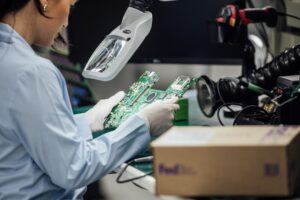
SPECIAL FEATURE | Digital friction costs workers 1.3 workdays a month, report finds
The survey, conducted by Sapio Research in August and September 2025, found that 80% of respondents lose time to dysfunctional workplace technology.

Workplace technology problems are costing employees an average of 1.3 workdays a month and are contributing to delays, lost revenue, employee frustration and turnover, according to a global survey of 4,200 managers and employees.
The survey, conducted by Sapio Research in August and September 2025, found that 80% of respondents lose time to dysfunctional workplace technology. The research covered employees and managers across the United States, Australia, Canada, France, Germany, India, Italy, Japan and the United Kingdom, with an equal split between managers and employees.
The report, titled The Impact of Digital Friction: Understanding How Dysfunctional Technology Drains Productivity, Performance & People, defines digital friction as workplace technology problems that prevent employees from doing their jobs or completing them efficiently. These include failures involving computers, smartphones, applications, connectivity, authentication systems and other workplace equipment.
Business costs
Nearly half of respondents, or 48%, said digital friction had caused delays in critical business operations or projects during the previous year. Another 42% reported revenue losses, while 37% said their organizations had lost customers or clients because of IT dysfunction.
The disruptions also affected routine work. Thirty-six percent said they had missed an important deadline because of IT problems, while 40% had missed or been late to a critical meeting.
Connectivity problems were the most common form of digital friction, affecting 88% of respondents during the previous year. Software crashes affected 82%, while 80% experienced hardware failures and another 80% encountered authentication problems. Forced software updates, restarts and cybersecurity incidents affected 66% of respondents.
The productivity impact varied by country. Workers in India reported losing an average of 1.9 workdays per month to digital friction, followed by the United States at 1.5 days. Japan reported the lowest figure at 0.79 days.
Only 15% of respondents expected to lose less time to digital friction in the following year, while 33% expected the problem to worsen. Increasing complexity in workplace technology was cited as the primary concern by 32% of respondents.
“Complexity in technology isn’t the enemy — it’s often the result of innovation,” said Oliver Steil, CEO of TeamViewer. “The key is managing that complexity, so it enhances productivity.”
Employees turn to workarounds
Persistent technology problems are also pushing workers toward unofficial solutions. Forty percent of employees said they use personal devices or applications as workarounds when workplace technology fails. The proportion rose to 66% in India and 51% in the United States.
The practice can create what IT departments refer to as “Shadow IT,” in which employees use unapproved hardware, software or cloud services without IT oversight.
“The biggest threat with employees using their own devices is the loss of control,” said Jan Bee, chief information security officer at TeamViewer. “When personal devices access corporate resources, they bypass enterprise protections and open the door to data leaks, phishing, and unauthorized access.”
The survey also found a gap in employee confidence in IT departments. Fifty-seven percent of workers said they do not trust their IT team to resolve issues quickly or effectively, while 47% feared their IT team would not adequately protect personal or work-related data. In addition, 62% said they lacked confidence that their IT teams were providing access to the latest AI and digital tools.
AI seen as a possible solution
Despite concerns about workplace technology, respondents expressed optimism about artificial intelligence as a way to reduce digital friction.
Forty-eight percent said they believe AI can reduce IT dysfunction in their organizations, while 46% said they trust AI to resolve technical problems faster than humans. Half of respondents were open to AI handling basic troubleshooting or password resets.
However, the report also identified limitations. Thirty-two percent said AI solutions they had tried had failed. Knowledge of AI agents varied considerably by age group: 37% of Baby Boomers and 29% of Gen X respondents said they did not know what an AI agent was, compared with 11% of Gen Z respondents.
“AI agents are rapidly becoming essential tools for automating knowledge work and reducing digital friction,” said Mei Dent, chief product and technology officer at TeamViewer. “But their success depends on human understanding.”
The report recommends measuring both technical performance and employee sentiment, improving IT visibility and creating clearer channels for employees to report recurring problems. It also recommends using automation and AI to identify root causes and address routine problems while retaining human oversight.
Human impact
The survey found that technology problems extend beyond productivity. Forty-seven percent of workers said digital friction makes them frustrated and less satisfied with their jobs, 43% said it reduces their motivation to produce high-quality work, and 42% associated it with burnout.
Twenty-eight percent said they had considered leaving their company because of digital friction. Overall, 69% believed digital friction had contributed to employee turnover in their organization.
The impact was particularly pronounced among younger workers. Gen Z respondents reported losing an average of 1.5 workdays per month to digital friction, compared with 0.7 days among Baby Boomers. Fifty-two percent of Gen Z respondents said they had used personal devices or applications to bypass IT problems, compared with 22% of Baby Boomers. Forty percent of Gen Z respondents had considered leaving their company because of IT dysfunction, compared with 12% of Baby Boomers.
The report also identified a gap between managers and other employees. Forty-four percent of employees expected digital friction to worsen the following year, compared with 23% of managers. Fifty-six percent of employees said IT dysfunction had a moderate or significant impact on turnover, compared with 36% of managers.
The findings suggest that reducing digital friction requires more than fixing individual technical problems. The report argues that organizations need to measure recurring failures, understand how employees experience technology and give IT teams the tools and visibility to address problems before they disrupt work.
“Reducing digital friction isn’t about overhauling everything at once,” said Andrew Hewitt, vice president of strategic technology at TeamViewer. “Leaders should start small — gain visibility into what’s actually causing friction, fix the biggest pain points, then scale those improvements through automation and AI.”
Full disclosure: All news articles published on the TechSabado website are written by human journalists, unless otherwise specified. Final text editing is also performed by human editors, with artificial intelligence (AI) used only to assist with additional grammar and style guide corrections..
————————————————————————-
TEN YEARS OF TECHSABADO!
PLEASE LIKE our FACEBOOK PAGE and SUBSCRIBE to OUR YOUTUBE & SPOTIFY channels.
WATCH TECHSABADO ON OUR YOUTUBE CHANNEL:
WE ARE ALSO ON SPOTIFY

WATCH OUR OTHER YOUTUBE CHANNELS:
PLEASE LIKE our FACEBOOK PAGE and SUBSCRIBE to OUR YOUTUBE CHANNEL.